

Master of Management Consulting Studio Spotlight
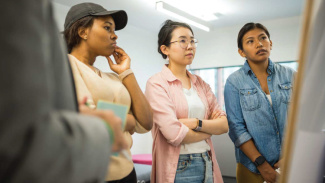
At Michigan Ross, the Master of Management Consulting Studio is where classroom learning meets real-world action-based impact. Working with global clients on complex business challenges, MM students are pushed to think critically, collaborate effectively, and deliver actionable insights under real constraints.
In this blog, members of one Consulting Studio team reflect on their experience advising an international client on a high-stakes growth strategy.
From navigating ambiguity and building structured approaches to learning how to operate as a high-performing team, their journey highlights what makes the MM Consulting Studio such a transformative part of the Ross experience.
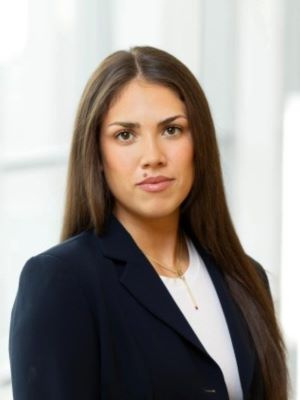
Charlotte DeSantos, MM ’26
Undergrad major
Economics and political science at the University of Michigan
Post-graduation plans
Consulting in New York City
What was the scope of your consulting studio project, and how did your approach evolve over the course of the project?
Our Consulting Studio Project focused on advising Adhesion, a New Zealand-based performance marketing agency, on an acquisition-led expansion into Australia. We were tasked with assessing the market's attractiveness, identifying and screening potential acquisition targets, and developing an actionable acquisition thesis within a defined NZD $10 million budget. Initially, having no mergers and acquisitions experience, our approach was naturally broad and exploratory. We focused on understanding the market landscape, including key players, platform dynamics, and regulatory considerations, to determine whether expansion into Australia made strategic sense and which industry was most attractive.
As the project progressed, our approach became more structured and execution-focused. The challenge of working with 896 agencies and limited standardized data forced us to move beyond surface-level research to build a screening framework from scratch that aligned with Adhesion’s strategic priorities. We incorporated signals of technical capability, platform strength, and client profile to narrow our initial longlist into a high-quality target list. By the end of the project, our work had evolved from a high-level market assessment to a clear, defensible acquisition strategy. We narrowed down to three viable firms, five to look further into, and provided practical guidance on how Adhesion could successfully enter and compete in the Australian market.
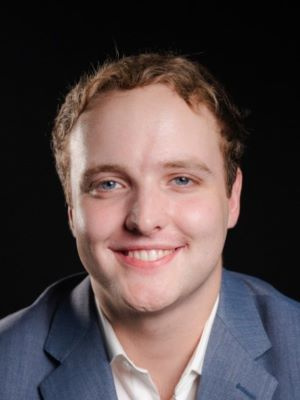
Ben Reynolds, MM ’26
Undergrad major
Music production and engineering at Berklee College of Music
Post-graduation plans
Marketing in Boston
How did your team effectively work together? What structures, roles, or norms made you successful? Using hindsight, what would you change, if any?
Our team effectively worked together by dividing work based on strengths, with different people leading industry analysis, target screening, project management, and storytelling. That created accountability while keeping the work efficient. One structure that helped a lot was our project tracker spreadsheet, where we assigned ownership, tracked deliverables, and kept deadlines and dependencies visible to everyone. That gave us clarity on who was driving what and made collaboration feel coordinated rather than siloed. With hindsight, I honestly wouldn’t change much. Some of our strongest learning came from moments where we had to course-correct, whether that was redoing parts of our slide deck after feedback, revisiting our screening criteria as we refined what strategic fit meant, or reworking the story as we got new input from the sponsor. Those weren’t really setbacks; they were part of the process. Working through those moments made us stronger as a team and ultimately led to a better final recommendation.
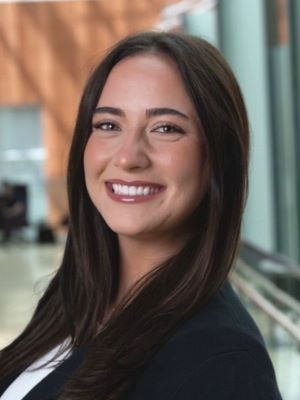
Emily Roberts, MM ’26
Undergrad major
Environment at U-M
Post-graduation plans
Consulting
How did you navigate ambiguity as a team, and what did that experience teach you?
The uncertainty was pretty consistent throughout this project. We had 896 agencies to work with, but barely any standardized data. Some firms had detailed websites, others had almost no online presence. Finding specific financial information was nearly impossible, and we couldn't rely on any single source to tell us what we needed to know.
We ended up developing a multi-source validation approach where we pulled from everywhere we could, including agency websites, LinkedIn, platform partner lists, and client case studies. For valuation specifically, we used benchmark estimates from our sponsors and derived a dual valuation model to make fair estimates where the data didn't exist online. When we still had gaps in the data, we made assumptions, documented them, and built in scenarios to show what would happen if we were wrong. The factor that kept us from going off track was staying close to the client. We checked in with the sponsor regularly, and that helped us figure out pretty quickly when our assumptions were off or when something we were stressing about didn't actually matter to their end goals of the project. It forced us to get way more comfortable with informed judgment calls, which I think is something you just can't easily learn in a classroom.
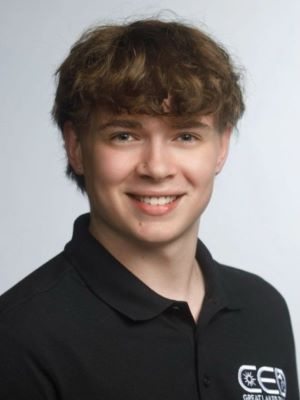
Tom Van den Bulck, MM ’26
Undergrad major
Computer science
Post-graduation plans
Product management in Seattle
What was your experience working with your faculty adviser and coach? How did they influence your thinking, process, or outcomes?
Working with Jeff and Shivangi (our faculty advisors) was easily one of the most impactful parts of the project. Jeff brought a level of rigor and real-world perspective that constantly pushed our thinking. Even after we got through our agendas, he would spend time sharing additional insights that reshaped how we approached problems and structured our recommendations. Shivangi complemented that perfectly by being incredibly accessible and keeping us accountable to a high standard throughout the process. Together, they struck the right balance of support and honesty. They didn’t sugarcoat feedback, which forced us to be sharper and more disciplined, and that directly improved the quality of our final work and recommendations.
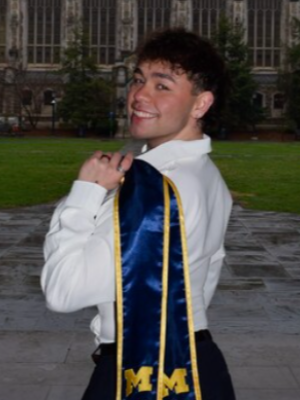
Danny Silva, MM ’26
Undergrad major
Psychology at U-M
Post-graduation plans
Fashion business in New York City
What is a key skill or takeaway you gained from this experience, and what advice would you give to future Consulting Studio teams?
A key skill I gained from this experience was learning how to work effectively with people from very different backgrounds and problem-solving styles in a team setting. Our group had people approaching the project through different lenses, whether analytical, technical, or storytelling-oriented, and one of the biggest lessons was how much stronger the work became when those perspectives were integrated well. One piece of advice I’d give future Consulting Studio teams is to invest early in genuine relationships with your teammates. The quality of the work is closely tied to the quality of the team dynamic. When there’s trust, people communicate more openly, give better feedback, and are more willing to step up for one another when the project gets demanding.
Experiences like the Consulting Studio are what set the Ross MM Program apart. As these students’ reflections show, success is not just about the final recommendation. It is about the process: building strong team dynamics, embracing uncertainty, and continuously refining your approach based on feedback and learning. These are the skills that prepare Ross MM graduates to thrive across industries and roles after graduation.
Interested in learning more about how the MM Program prepares you for what’s next? Your journey starts here!