

Advice From Michigan Ross MBA Alums on Changing Industries, Cities, and Careers

Students pursue MBAs for countless reasons, and for many, the degree can be a catalyst for major career changes. Four Ross School of Business Full-Time MBA alums share the pivots they made and how their MBA helped make them possible.
A Michigan Ross MBA can open the door to meaningful career change, whether that means switching industries, stepping into leadership roles, or pursuing opportunities in a new city. Through a rigorous, customizable curriculum and action-based learning experiences like the Multidisciplinary Action Project, students build real-world skills that translate into career momentum.
For many prospective MBAs, that momentum includes a move to a major metro area. Sixty-seven percent of job offers accepted by Michigan Ross Full-Time MBAs in 2025 were located on the East Coast, West Coast, or in Chicago, reflecting the Ross MBA’s ability to prepare graduates to enter these competitive markets.
To better understand how these transitions happen in practice, we asked four Ross MBA alums to share their stories and reflect on how they navigated career pivots, leveraged their time at Ross, and built new professional paths in some of the country’s largest cities.

Jennifer Kattula, MBA ’04/BSE ChE ’98
Most Recent Role
Chief marketing officer, Microsoft Advertising
Role Location
Atlanta, GA
In what ways did your Michigan Ross degree help you pivot industries, functions, or locations successfully?
My engineering background gave me a strong foundation for technical roles at Sapient and PwC, but my Ross MBA was pivotal in marrying my passions for technology and communications with marketing roles at tech companies. Ross connected me to big tech and startup opportunities, facilitating connections in San Francisco and Seattle. That put me on a path to begin at Microsoft and then opened the door to Facebook — all of which was really career and life-changing. I can't overstate how important it was for me to understand the full tech landscape when the web was still in its early days, and Ross really helped me do that.
Which part of your business school experience has had the greatest long‑term payoff?
The biggest payoff wasn’t from a single class or experience; it was understanding the value of people and collaboration — throughout the very beneficial Ross network and across different industries, companies, and functions. Learning to appreciate what others bring to the table continues to shape my leadership more than any course. Today, as a CMO working routinely with counterparts in sales, finance, human resources, and product, I constantly draw on my early exposure to people who approach problems from different angles. And, I'm amazed at how often I bump into Ross alumni at conferences, airports, and everywhere in between!
What advice do you have for current Michigan Ross students looking to land a job in a major U.S. metro area?
Applying to jobs as your sole strategy won't work. It's about your network and relationships: Join local communities in the cities where you want to work, reach out to people you follow on LinkedIn or other platforms, and have a point of view on your chosen industry or function. If you are an early-career professional, bring your cultural and generational perspective — you can help a potential employer think differently.

Ajay Salpekar, MBA ’12
Most Recent Role
General manager - beauty, food, and beverage, TikTok Shop
Role Location
Seattle, WA
In what ways did your Michigan Ross degree help you pivot industries, functions, or locations successfully?
With a strictly engineering and technology background, I came to Michigan Ross intent on pivoting into business roles where I could make decisions on strategy and profit and loss, a far cry from my former background. My Michigan experience gave me the foundational skills and the confidence to make this pivot.
Looking back, I’d say it was equal parts the academic curriculum — particularly the courses in strategy, economics, and marketing; the copious practical experience through my consulting internship and MAP project — and the case study interview prep I did with other Rossers, which allowed me to learn with and get feedback from my peers. What you may not realize when you are in the program is that all of this ‘prep’ doesn’t just get you that first job, it also serves as the foundation of the skill set and mindset you apply to your career post-Ross.
Which part of your business school experience has had the greatest long-term payoff?
My time at Michigan Ross has widened in ways that are hard to comprehend when you’re still in the program. In the short span of less than two years, I learned so much from the hundreds of case studies I had to read and analyze for coursework and interview prep. From partnering with peers from different careers and cultures on problem-solving during projects and assignments, to learning by doing in the many practitioner opportunities that Michigan Ross provides.
Today, as a business operator and general manager, I find the multiple lenses through which I look at business problems invaluable. I realize that my time at Michigan Ross primed me to view multifunctional business problems from multiple angles and to weave together inputs across analytical, economic, marketing, technological, organizational, and logistics lenses. The University of Michigan, more than most universities, fosters a multi-disciplinary, collaborative, and practical outlook, and I see that paying dividends.
What advice do you have for current Michigan Ross students looking to land a job in a major U.S. metro area?
Balance the objectives of widening your lens by exploring courses, projects, and industries that only a two-year break from the industry allows you to do. Eventually, focus on just one or two industries and a handful of companies you’re interested in. If you come in wide-eyed, explore everything, but never narrow your focus to the pipelines you want to convert, that’s likely not optimal. If you come in hyper-focused on the outcome and the interviews that you don’t really get to expand your skill set, learn new things, and enjoy yourself, you’re also not getting the full benefit of U-M.
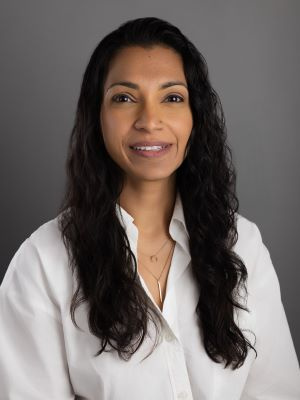
Samira Jabbar, MBA ’10
Most Recent Role
Global head of go-to-market effectiveness, Indeed
Role Location
Austin, TX
In what ways did your Michigan Ross degree help you pivot industries, functions, or locations successfully?
I would say that when I came to Ross to do my MBA, I thought I wanted to focus on marketing, but as I took more strategy courses, I felt a calling to explore it further, and it turned out to be the direction I went in. My Ross experience helped me make that shift, navigate my consulting recruiting, and really understand case prep, etc.
During my time at Ross, there was also a West Coast forum we could attend, which helped me meet people at PRTM Management Consulting (later acquired by PwC Consulting). I realized that PRTM was the right size and the right kind of company that I wanted to target. That event and realization really helped me narrow down the kinds of companies I wanted to work for, and more importantly, introduced me to them.
And then, of course, strategy courses helped me develop that interest and sharpen my thinking and decision-making. I would also say the Multidisciplinary Action Project experience was great, and it helped me get a feel for what consulting would look like in practice. Lastly, the peers I met who went into consulting have also been invaluable to my career journey, even to this day. They were my resource for helping me understand things like, “What kind of roles should I target if I want to go into tech, or into industry? How do I think about that pivot? What kinds of things do I need to do?” So a lot of my classmates, who are now lifelong friends, have helped me through that journey as well.
Which part of your business school experience has had the greatest long-term payoff?
I would say, for one, the brand. I think there's definitely a Ross brand that can take you places. And the network would be my number two. You can always reach out to Ross alums on LinkedIn — I've always had success when I've reached out to fellow alums for help.
Besides the larger network, I would say the network that I developed has had a lot of long-term payoff for me. Many of the friends I made at Ross became lifelong friends. Some of them have been in my wedding, or I've been in their wedding. We provide each other career advice and go on annual trips.
What advice do you have for current Michigan Ross students looking to land a job in a major U.S. metro area?
I would really say target the companies that you want to work for, and that will take you where you want to go. Do your research when you look into them. Do they have a major presence in the locations you’re looking to relocate to? Of course, now many things are hybrid or remote, so take that into consideration, too. And especially if you're going into consulting, if your offer is based in one city, it might be worth asking your employer to move you to a different city if the company has offices there, and that’s where you’re trying to move.
I would also say, when trying to land a role in a major city, don’t limit yourself to large companies. There's always going to be flashy companies that everybody is thinking about and wanting to recruit for, but remember that it’s also worth considering smaller companies that you might not have heard of before, especially if the location is where you’re trying to go.
I ended up finding Novo Nordisk, which didn't actively recruit on campus and wasn't as well-known in the United States at the time. It is now a more recognizable brand name. So, utilize your network and definitely target companies in areas you want to go, but don’t limit yourself.

Ronak Shah, BS ’00/MBA ’06
Most Recent Role
Director of product management, Apple
Role Location
Cupertino, CA
In what ways did your Michigan Ross degree help you pivot industries, functions, or locations successfully?
I think where Ross really helped me was in making the transition from an engineer to someone who could take on a product marketing role. And I would say it also helped me as a manager and leader by helping me understand the business side and how people think about solving problems and leading a team. Those were all really important to me as I transitioned from engineer to product manager.
Which part of your business school experience has had the greatest long-term payoff?
I think my experience working on a Multidisciplinary Action Project was really valuable. Working with a team of fellow students from diverse backgrounds and skill sets was such an important experience. It really gives you an understanding of the types of skills that you might not have. There are people from finance, consulting, and healthcare with unique skills and ways of thinking about problems.
The cool thing about MAP is that it really gives you hands-on experience developing your skills around working with people with different skill sets and perspectives. Getting the chance to learn about and apply the different ways they think about things to your own work was so helpful.
The Michigan Ross — and larger U-M network — is also incredible. I think that’s been the biggest benefit of going to Ross. We have an extensive U-M network, even here at Apple, and so having that common point of reference, that common experience, is really valuable.
What advice do you have for current Michigan Ross students looking to land a job in a major U.S. metro area?
My biggest piece of advice is to be really proactive about reaching out. One of the amazing things about U-M, as I mentioned, is the alumni network. There are U-M people everywhere, and there is an incredible U-M community here in the Bay Area. Not only are they here, but they love Michigan and want to help you.
When I've reached out to a U-M person with a question or wanting to connect, it’s rare that they don’t respond. The thing that I encourage people to do most is network. Reach out to people. It’s okay to send somebody a note on LinkedIn and say, “Hey, I'm a student at Michigan Ross right now, I want to learn more about your company, or your role, or you.” The same goes for alums coming to campus. Talking to people after they've presented, after a career session, asking questions, and sharing a little bit about yourself, those things go a long way. I think a huge strength of Ross is that it really enables students to do that kind of thing.