

Michigan Ross BBA Students Earn Third Place in Inaugural National Impact Case Competition Sustainability Challenge
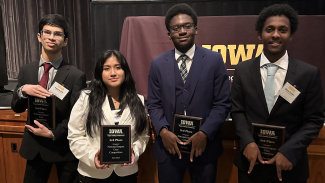
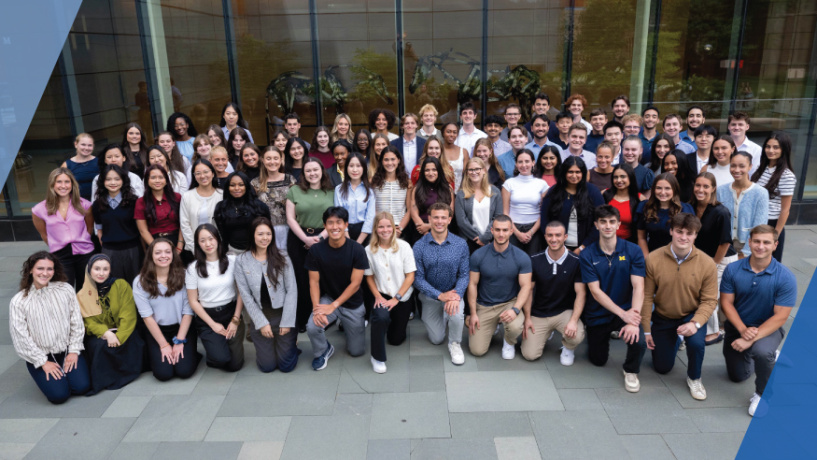
A team of undergraduate students from the Ross School of Business recently earned an impressive third-place finish at the inaugural National Impact Case Competition, held by Tippie College of Business at the University of Iowa.
The NICC challenges undergraduate teams from schools around the world to apply business knowledge and tools to make a positive impact now and in the future. For this year’s case — sponsored by Krause Group — teams developed a people, planet, and profit approach for a stadium and plaza project. The competition gave Michigan Ross students an opportunity to apply what they’re learning in the classroom to a meaningful sustainability and development challenge, gaining the hands-on, high-stakes experience that employers value.
Below, members of the Ross team share why it was important for them to participate in the competition, the ways Ross prepared them to compete, and how they went about tackling the challenge.
Stephen Asante, BBA ’28

Hometown: Denver, Colorado
Future career interest: Strategy consulting and entrepreneurship
What motivated you to participate in this competition, and why was it meaningful for you?
It was an opportunity to compete outside of the Michigan atmosphere, meet new people, and see what Iowa had to offer. The meaning came from the entire experience, from signing up to the solving period, shared dinners, and presentations during our time there.
What do you think helped your team stand out in this competition?
Our collective knowledge from coursework and extracurriculars at Ross elevated our knowledge of the case, but the diverse perspectives applied to each section of the prompt created a response and presentation that appealed to the judges.
How did the team approach developing a solution?
Our team, noticing how Krause Group was trying to accomplish this task in Des Moines, Iowa, centered our research and approach in the Des Moines area to further explore the region and the benefits of building in this area.
Jasmine Mucha-Nonalaya, BBA ’28
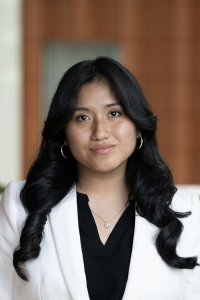
Hometown: Longmont, Colorado
Future career interest: Real estate and wealth management
What motivated you to participate in this competition, and why was it meaningful for you?
It was a chance to meet with students across the United States and see how they tackled the case competition differently from us. It was also a way to see how we can always improve and learn from what other business schools did well. It was meaningful since I contributed to a team that is unique and hardworking. It was a pleasure to get closer to my teammates and learn to adapt in high-pressure situations.
What was the most challenging aspect of the competition, and what was the most rewarding?
The most challenging aspect of the competition was balancing work and enjoying the moment. I felt that we as a team wanted to do well, but stress would get in the way of enjoying the moment. However, in the end, the memories we created getting into the top three were a great representation of all the time we dedicated to the case.
Aayush Sule, BBA ’28

Hometown: Grand Rapids, Michigan
Future career interest: Consulting
In what ways did Ross prepare you for the competition?
One of the main reasons I personally think I did well was because of the experience I gained through the Sanger Leadership Center’s Crisis Challenge. Facing tough questions from judges during the competition was very reminiscent of the press conference during the Crisis Challenge, where mock reporters and the board of directors grilled us with hard-hitting questions.
Can you share a fun or memorable moment from your time at the host institution or city?
A moment that stood out to me happened during one of the closing ceremony speeches. The speaker harkened back to our early days of learning economics, where we learned the factors of production: labor, land, and capital. However, he flipped this theme, replacing each of the words with people, planet, and profits. Both sets of words convey very similar information, but by changing the verbiage, the speaker recontextualized these factors in a way that lends itself much better to responsible business. I found it very insightful.