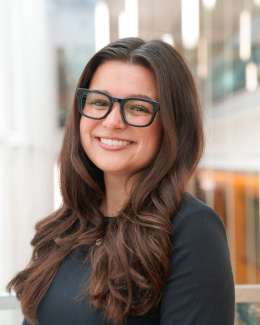


From Michigan Ross to Goldman Sachs: Bizzy Webb, BBA ’26, on Developing Leadership
As many of you know, the University of Michigan proudly calls itself the “Leaders and the Best.” I had heard that phrase often before coming to campus, but I didn’t fully understand what it meant until I experienced it firsthand as a BBA at the Ross School of Business. It was through my involvement with the Sanger Leadership Center that this idea really came to life and began to shape not just what leadership means to me, but also how I show up as a leader on campus and, ultimately, how I approached my recruiting journey.
Throughout my time with Sanger, I have participated in the Leadership Crisis Challenge, Legacy Lab, Story Lab, Leadership Dialogues, and served as a student ambassador for the past 2.5 years. I’m also excited to be on track to earn my Michigan Ross Leader Endorsement when I graduate this May, a distinction that recognizes students who have made a sustained commitment to developing as leaders through coursework, hands-on experiences, and reflection throughout their time at Michigan Ross.
Holistically, Sanger has taught me that leadership is about how you show up, how you listen, how you build trust, and how you bring people together to navigate complex challenges. Time and time again, I’ve seen that the strongest leaders balance strategy with empathy and results with genuine human connection. As I reflect on my journey, two Sanger experiences stand out as especially formative: returning to the Leadership Crisis Challenge during my senior year and the opportunity to be featured on a podcast centered on the Michigan Model of Leadership.
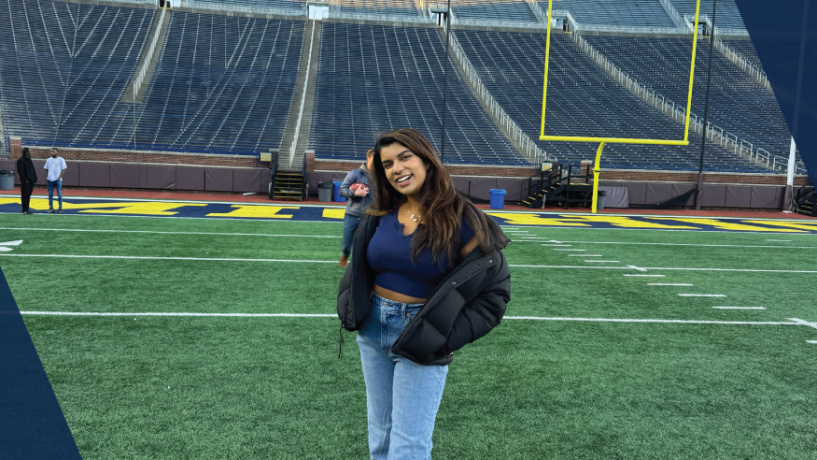
Returning to the Leadership Crisis Challenge during my senior year was one of the most defining moments of my Sanger experience. After competing as a sophomore, I came back with a desire to push myself further in a high-pressure, real-time environment. Alongside my team, VictHERs, I served as chief communications officer, navigating an autonomous vehicle crisis and managing stakeholder demands through constant emails, press inquiries, and executive updates, all while ensuring our messaging remained clear, transparent, and grounded in trust. One of the most impactful moments was stepping into a live press conference in front of all participants, where every word carried weight, and presenting our strategy at Michigan Stadium to a simulated Board of Directors. While our team was honored to earn first place, what stayed with me most was the confidence I gained in my ability to lead through ambiguity, collaborate under pressure, and bring clarity in moments that matter most.
In a very different way, being featured on a Sanger podcast centered on the Michigan Model of Leadership pushed me to reflect more deeply on what leadership truly means. The model, grounded in decades of research, is built on a simple but powerful idea: leadership is full of tension. It challenges us to navigate between collaborating and driving results, and between providing structure and making space for innovation. What I’ve come to realize is that leadership isn’t about choosing one side over the other; it’s about learning how to hold both, intentionally.
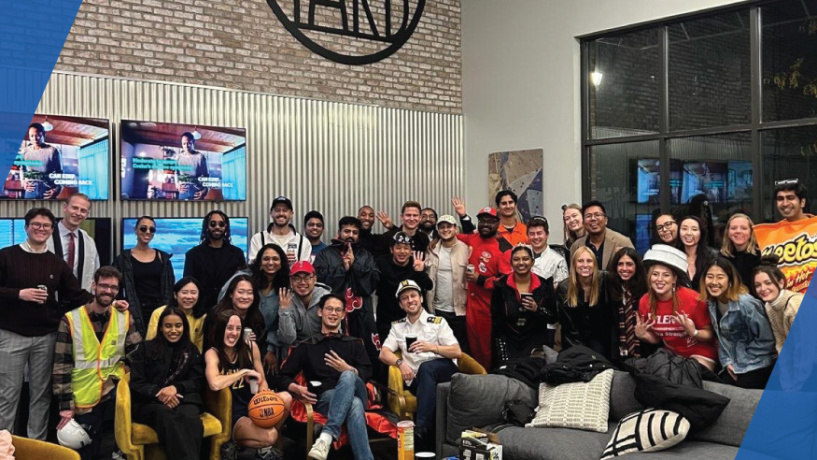
Through my experiences at Michigan Ross, I’ve seen these tensions play out in real time. As a former president of the Ross Retail Club, I led the organization through rapid growth, expanding membership by over 500% and managing a 25-person team, while balancing big-picture strategy with the day-to-day execution required to deliver meaningful experiences, such as our annual NYC trek, for our members. Through my work with Hopelessly Yellow, I learned what it means to lead with empathy, building community through wellness programming and cross-campus partnerships. In my mentorship roles — peer mentor, career development coach, global buddy, and section assistant — I developed the ability to listen deeply, build trust quickly, and support students with diverse goals. And as former director of philanthropy for Tri Delta, I saw firsthand how leadership can mobilize people around a shared purpose, helping raise over $100,000 for St. Jude Children’s Research Hospital.
Across all of these experiences, a common thread emerged: leadership is most influential when it is both results-driven and deeply human. These experiences didn’t just shape how I lead; they also shaped how I could tell my story throughout my recruiting process. Time and time again, I found myself drawing on these moments to speak to how I think, how I collaborate, and how I show up for others.
As a result, I’m excited to share that upon graduation, I will be returning to Goldman Sachs in New York to join the Client Solutions Group within Asset Management, following my internship with the team this past summer. In this role, I’ll have the opportunity to work at the intersection of marketing and finance, helping position and communicate investment solutions in ways that strengthen client relationships and deliver meaningful outcomes.
More importantly, I hope to bring with me the leadership foundation Sanger has instilled: the ability to navigate complexity with intention, balance results with relationships, and lead with both strategy and empathy. In a client-facing environment like CSG, where trust, communication, and adaptability are critical, I’m excited to continue growing into a leader who not only delivers results but also creates impact for both clients and the communities we serve.
This is what I’ve come to know as the Michigan difference. I’m incredibly grateful for the role Sanger – and Ross more broadly – have played in shaping how I lead, and I can’t wait to bring that foundation with me to Goldman Sachs.
Go Blue!