

Michigan Ross Students Reflect on Leadership Skills and Self-Discovery Through the Ross Leaders Academy
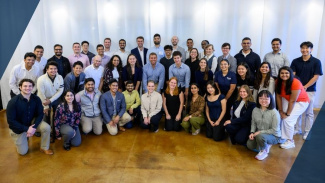
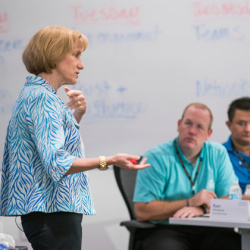
The Ross Leaders Academy asks students to do something rare in a fast-paced business school environment: slow down and look inward.
The Sanger Leadership Center at the Ross School of Business hosts the year-long program that helps students make leadership a central part of their Michigan Ross experience. Through guided reflection, coaching, and group activities, students explore themes such as identity, purpose, communication, empathy, and resilience — not as abstract ideas, but as practical skills they can apply at Ross and beyond.
In this Q&A, four Michigan Ross students share what the RLA experience was like, what challenged them most, and how the academy reshaped their understanding of leadership.
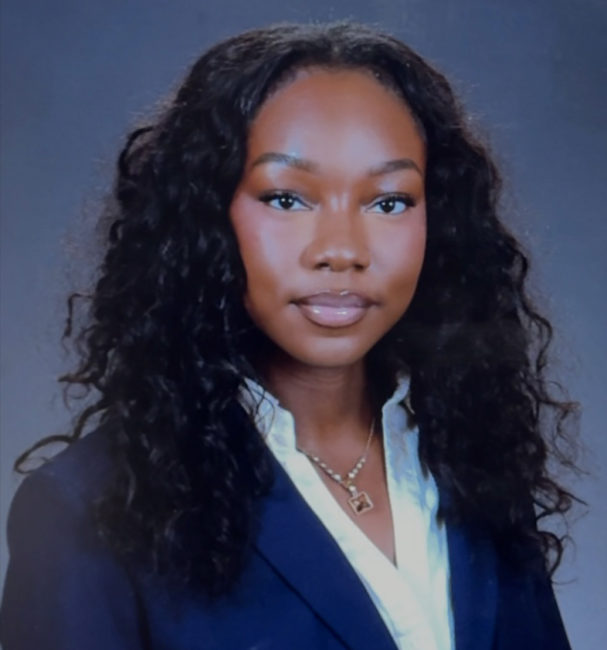
Danielle Ewang, BBA ’26
Career interest/goal: My goal is to build a career in finance focused on making meaningful investment decisions while increasing the presence of Black women in the industry.
How was your experience participating in the Ross Leaders Academy? What did you get to do?
My experience in the Ross Leaders Academy was much more reflective and hands-on than I expected. Each session focused on a specific theme, and instead of just discussing ideas, we worked through them in a very personal way. At the start of the program, we were given a journal, and we used it in every session to write, reflect, and process what we were learning.
One of the first sessions that stood out to me was the identity session, where we created an identity timeline, mapping the experiences that have shaped who we are. Seeing everything written out like that gave me a different perspective on my own life and helped me connect patterns across my experiences.
Another moment that stayed with me was from the purpose session. We were asked to think about who we would be 30 years from now and what someone would say when introducing us. From there, we had to write out a purpose statement. That exercise forced me to slow down and really think about what drives me and what I want my long-term impact to be.
Across all sessions, there was a strong emphasis on reflection and intention. Whether we were working through empathy, values, or resilience, the goal was always to go beyond surface-level answers and really understand ourselves more deeply.
Overall, the experience felt very personal. It was not about fitting into a specific model of leadership, but about understanding who you are and using that as the foundation for how you lead.
What kinds of skills did you get to apply and develop through this program?
I developed stronger self-awareness, communication, and a greater sense of intentionality in how I engage with others. One of the biggest shifts for me was learning how to reflect more deeply and really think about what drives my decisions, what I value, and how I naturally show up in different situations. That made me more thoughtful and deliberate in both group settings and one-on-one interactions.
This program helped strengthen my communication skills and changed the way I think about communication. I learned that it is not just about responding well, but about asking questions that go beyond the initial answer. A lot of those questions challenged me, too. They left me sitting with my thoughts longer than I expected because they brought up perspectives I had not fully worked through before. That showed me how powerful a well-placed question can be in shifting a conversation and creating deeper understanding.
Another area of growth was empathy. By hearing other people’s experiences while reflecting more honestly on my own, I became more aware of how differently people can experience the same situation. That made me more intentional in how I respond to others and how I think about building trust.
How has your understanding of leadership evolved since joining the academy?
Before RLA, I saw leadership as being able to guide a group toward a goal and make sure things got done. I still believe that is an important part of leadership, but the program made me think more deeply about what actually allows that to happen well.
Through the experience, I came to understand that leadership is not just about direction or outcomes, but also about whether people feel trusted, comfortable contributing, and fully engaged in the process. It showed me how much people’s experiences affect how a team functions.
I also began to see that leadership starts with self-awareness. The more honest you are about your own values, habits, and tendencies, the more intentional you can be in how you lead others. That shift made leadership feel less like a role you step into and more like something you are constantly building through how you show up every day.
What was the most challenging part? Did anything surprise you?
The most challenging part of the program was vulnerability. Before RLA, I didn’t think being open was hard for me. But practicing it consistently — especially with a group I didn’t know well at first — was challenging.
We were regularly asked to share personal experiences, reflect on things that shaped us, and talk about our goals and uncertainties in a more honest way. What surprised me was how much that vulnerability shaped the experience. The more people opened up, the more trust was built, and the more meaningful the conversations became. It showed me that real growth can depend on how willing you are to be honest and open, even when it feels uncomfortable.
What was your biggest takeaway, and why would you recommend the Leadership Academy to other students?
My biggest takeaway from RLA was realizing how much growth can happen when you are in an environment that pushes you to be both reflective and honest. The program gave me real clarity about who I am, what drives me, how I relate to other people, and the kind of leader I want to become. That is something I will carry with me long after college.
The Ross Leaders Academy was one of the best experiences I had during my time at Ross. I recommend it to other students because the coaches and staff create a supportive space where you can be yourself, be open, and fully engage — so you get a lot more out of the program.
What makes it so valuable is that it is not just focused on what you achieve, but on who you are becoming. It challenges you to reflect, to be honest with yourself, and to think more intentionally about how you want to move through your life and career.

Shubham Mishra, MSCM ’26
Career interest/goal: My goal is to build a career at the intersection of supply chain management, operations, and leadership. In the long term, I want to be in a leadership role where I can build more resilient and sustainable supply chains.
How was your experience participating in the Ross Leaders Academy? What did you get to do?
My experience in the Ross Leaders Academy was one of the most meaningful parts of my time at Ross. What made it stand out was that it did not treat leadership as something theoretical. I was not just learning concepts in a classroom setting. I was constantly applying them, reflecting on them, and coming back with a better understanding of how I show up as a leader.
A big part of that experience was working with my leadership coach, Kathy, who played a very important role in my journey through the program. Our conversations pushed me to slow down and think more deeply about my instincts as a leader. Coming from a military background, I was used to stepping in quickly, solving problems fast, and driving outcomes under pressure. Kathy helped me see that leadership also means creating space, listening more carefully, and helping others take ownership rather than always being the one with the answer. That shift was very meaningful for me.
Through the program, I participated in coaching conversations, group discussions, reflection exercises, and action-based learning that helped me better understand my leadership style. I also had the chance to learn alongside people from different programs, backgrounds, and leadership styles. That made the experience even richer because it showed me that effective leadership does not look just one way.
What kinds of skills did you get to apply and develop through this program?
The biggest skill I developed was learning to move from being the person who always has the answer to being the person who helps others find their own answer. That required growth in a few areas.
- Communication: I became much more thoughtful about how I ask questions, how I listen, and how I create room for other people’s ideas.
- Self-awareness: RLA helped me recognize that one of my default patterns was to jump in quickly, especially when I felt responsible for the outcome. That had helped me in some environments, but I also realized it could unintentionally limit others’ ownership.
- Coaching and leadership presence: I became more comfortable guiding discussions, holding back when needed, and trusting that leadership is not always about being the loudest or fastest person in the room.
- Reflection: Learning how to reflect on my leadership style was one of the most valuable skills I built because it helped me connect what I was learning to how I actually lead in class teams, student leadership roles, and recruiting conversations.
How has your understanding of leadership evolved since joining the academy?
Before joining the academy, I think I often equated leadership with competence under pressure: staying calm, solving problems quickly, and driving the team forward. That is still part of leadership, but my understanding has become much broader.
Now I understand leadership is much more about creating the conditions for other people to succeed. It is about trust, listening, reflection, and helping people take ownership. It is also about understanding that your impact as a leader is not just measured by what you personally accomplish, but by what your team becomes capable of doing because of how you lead.
That shift has been important for me. RLA helped me see that leadership is not only about action. It is also about restraint, awareness, and intention.
What was the most challenging part? Did anything surprise you?
The most challenging part was unlearning habits that had served me well in the past. In my previous work, I was often in environments where delays were costly, and mistakes could become serious very quickly, so I built a strong instinct to step in fast and take control. But RLA challenged me to ask whether that instinct always creates the best outcome for the team.
I was surprised by how powerful it can be to do less in the moment. Asking one good question was often better than jumping to a quick solution, and stepping back helped others step up. It wasn’t easy for me, but it was one of my biggest mindset shifts.
I was also pleasantly surprised by how much I learned from the vulnerability and honesty of others in the program. Some of the most valuable moments came from hearing how other people were navigating leadership in very different contexts.
What was your biggest takeaway, and why would you recommend the Leaders Academy to other students?
My biggest takeaway was that leadership development requires honest reflection and a willingness to make changes to become a better leader. RLA helped me think about leadership in an abstract way and identify specific patterns in how I lead and techniques for how to become a more effective leader.
I would recommend the Leaders Academy to other students because it gives you something that is hard to find in a busy graduate program: a structured space to think deeply about the kind of leader you want to become. For me, that made the experience especially valuable. It has already shaped how I lead in student roles, how I work in teams, and even how I think about the kind of professional I want to be after Ross.

Max Griffith, MBA ’27
Career interest/goal: I am coming from consulting, but would like to pivot into tech or fintech.
How was your experience participating in the Ross Leaders Academy? What did you get to do?
My experience was fantastic. I’m not naturally a very introspective person, and I don’t often take the time to reflect on my career or life path. RLA provided structured programming and exercises that encouraged reflection, especially early on in the program.
Through guided activities, I was able to think more deeply about my personal values and how my past experiences have shaped me. Those moments of reflection have helped me grow as a leader, and they’re exercises I likely wouldn’t have done on my own without RLA.
What kinds of skills did you get to apply and develop through this program?
While RLA is fundamentally a leadership program, I found that communication was the skill I developed the most. Many of the activities involved reflecting on personal experiences, journaling about them, and then sharing those reflections with one or two peers.
Because the program emphasizes open dialogue and peer feedback, I had frequent opportunities to practice communicating thoughtfully and authentically. That combination of reflection, sharing, and feedback made communication a central part of the experience.
How has your understanding of leadership evolved since joining the academy?
My understanding of leadership has evolved to center much more on self-awareness. I’ve come to appreciate how important it is to truly understand your own values in order to lead effectively. Having that clarity helps you make better decisions in difficult situations and navigate the complexities of team dynamics and culture. Leadership is not just about guiding others; it starts with understanding yourself.
What was the most challenging part? Did anything surprise you?
The most challenging part for me was becoming comfortable with vulnerability, especially opening up to a group of people I had just met. Many of the RLA activities require reflecting on meaningful or sometimes difficult life experiences, which can feel uncomfortable to share.
What surprised me, though, was how quickly that discomfort faded. Everyone in the program is going through the same process, which creates a shared sense of trust. That environment makes it much easier to be open and authentic.
What was your biggest takeaway, and why would you recommend the Leaders Academy to other students?
My biggest takeaway is that being an effective leader starts with having a strong understanding of yourself, your values, your experiences, and how they shape your leadership style.
I would highly recommend the Ross Leaders Academy to any student who wants to grow as a leader. Even if you already see yourself as a strong leader, there is always room to improve. RLA also creates space to slow down and reflect, which is incredibly valuable, especially in a fast-paced, high-achieving environment like business school.
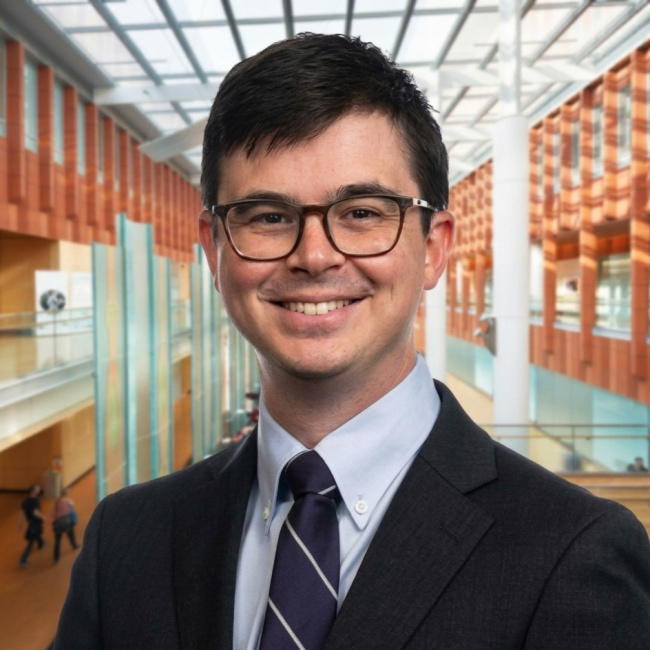
Henry Smith, MBA ’27
Career interest/goal: After graduation, I’m hoping to join a general management development program — ideally in industrial or technology manufacturing.
How was your experience participating in the Ross Leaders Academy? What did you get to do?
My experience was really positive. The program was paced well — consistent enough to stay top of mind, but never so frequent that it felt like an overwhelming extracurricular. We did a mix of lectures, exercises, and group activities, heard from guest speakers, and even had a few off-campus sessions, including one at the botanical gardens that included a grounding exercise and a nice change of pace.
What kinds of skills did you get to apply and develop through this program?
Communication was a big one — not just learning why it matters, but practicing it by speaking up in sessions and working through tough topics with peers. I also developed a stronger ability to be vulnerable and bring more of my “whole self” to a team, which helped me connect more genuinely with others. And I learned a lot about coaching others — especially asking open-ended questions and helping someone reach their own conclusions rather than telling them what to do.
How has your understanding of leadership evolved since joining the academy?
I came in expecting it to be mostly about how to lead other people and build a high-functioning team. What really expanded my view was the emphasis on the internal side of leadership — getting clear on your own values and purpose first. I now see leadership as something that starts with that alignment, and then extends into the culture and values you help build in the community you’re leading.
What was the most challenging part? Did anything surprise you?
The most challenging part was leaning into vulnerability early on. In one of the first sessions, we did an exercise where you share your life story through a personal timeline, and I didn’t expect to talk about parts of my childhood with someone I hadn’t known for very long. What surprised me was how supportive it felt, and honestly, how freeing it was to share with someone who could offer a fresh perspective.
What was your biggest takeaway, and why would you recommend the Leaders Academy to other students?
My biggest takeaway is that leadership isn’t any one skill; it’s a set of connected ideas and principles grounded in purpose and values, both your own and the ones you cultivate in your community. I’d recommend the academy because it gives you space to work on meaningful leadership topics alongside a highly motivated cohort. The material may overlap with themes you’ll hear elsewhere in an MBA, but the way it’s packaged — and how much you learn from your peers — makes it more meaningful.