

A Part-Time MBA With a Full-Time Return
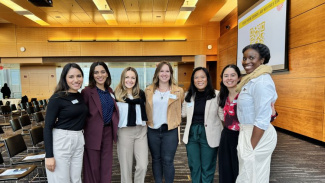
When I started the Weekend MBA Program at the Ross School of Business, I knew I wanted a part-time curriculum that fit my life without losing the return on investment, community, and career acceleration that Full-Time MBA students pursue. What I quickly learned is that at Michigan Ross, those outcomes are less about your program and more about how intentionally you leverage the resources around you.
Here are five resources that have shaped my WMBA experience and how they have helped me create a full-time feel in a part-time program.
1. Career Development Office
As a working professional — and someone pursuing internship recruiting in a program where only a handful of WMBA students do so — the Career Development Office has been foundational. Through structured coursework and one-on-one coaching, I have learned how to translate my nontraditional background into a compelling MBA narrative, refine my resume, and understand the language and mechanics of recruiting, from my elevator pitch to coffee chats.
The breadth of CDO resources has supported me at every stage of my MBA experience. I joined a consulting-focused Functional Accountability Career Team, knowing that the rigor of consulting interview prep would elevate all of my interviews. CDO’s Interview Power Hours — interactive sessions designed for fast, constructive feedback — helped me rehearse my story, sharpen my pitch, and build confidence.
Throughout my search, the Ross Recruit portal has served as my go-to hub for company insights, timelines, salary data, and interview feedback. The CDO isn’t just supporting my job search; it is equipping me to thrive in the recruiting landscape.
2. Healthcare & Life Sciences Club
As a healthcare provider transitioning into business, the Healthcare & Life Sciences Club provided me with context, community, and real-world exposure. The weekly Sunday Sessions broke down industry news — initial public offerings, acquisitions, and funding rounds — and helped deepen my understanding of what these moves mean for patients, providers, and the healthcare ecosystem as a whole.
The annual HLS Symposium was a standout, featuring insights from Aetna’s CEO on leading a rapid transformation and the key lessons learned. Additionally, I joined the 2025 Healthcare Trek, visiting the AbbVie, Medline, PwC, and Chartis offices in Chicago to explore firsthand how payers, providers, pharmaceutical companies, and medical technology companies intersect.
3. Consulting Club
The Consulting Club demystified an entirely new skill set. Weekly meetings taught me the fundamentals of case interviews, while access to extensive casebooks made structured practice possible. Even more valuable were the relationships with other students who became practice partners, coaches, and collaborators. We challenged one another, shared feedback, and raised our collective bar. Thanks to this community, I learned to structure my thinking and navigate the consulting recruiting journey with confidence.
4. Student Ambassador Program
Before applying to Ross, I connected with multiple student ambassadors — especially those with healthcare backgrounds — to understand their motivations for pivoting and what they gained from the MBA experience. These conversations were essential as I evaluated whether pursuing an MBA was right for me. Now, as a WMBA student ambassador myself, I am able to pay it forward by supporting prospective students and alumni, many of whom have similar healthcare journeys. This role has strengthened my conviction that supporting others is essential to our collective growth.
5. Weekend MBA Association
Lastly, the Weekend MBA Association is sincerely the heartbeat of our WMBA community. As an active member of the social committee and director of Winter Formal, I have had the privilege of helping organize events that bring us together, from family picnics to indoor golf outings after class. These leadership experiences have connected me to my classmates in ways that go beyond academics. My peers feel comfortable reaching out, relying on me as a resource, and collaborating — creating a sense of belonging and support that is often sought in full-time programs but is deeply present here.
The takeaway? A part-time MBA doesn’t have to feel part-time. At Ross, the resources are there. The return is there. If you lean in, the experience is just as full.