



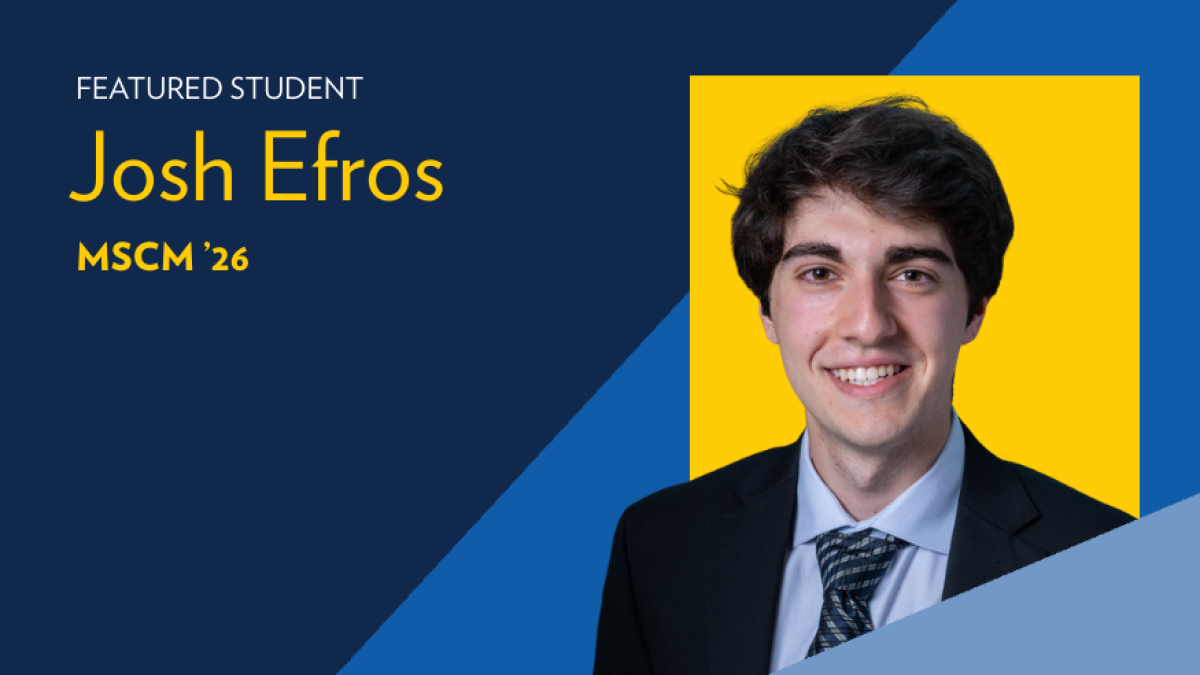
Josh Efros, MSCM '26
While earning his undergraduate degree in economics at the University of Michigan, Josh Efros, MSCM ‘26, discovered a passion for solving the real-world operational problems organizations face. A master’s degree in supply chain management seemed like the perfect next step, and Efros was drawn to the Ross School of Business Master of Supply Chain Management Program because of its emphasis on hands-on learning and collaboration.
While pursuing his Master of Supply Chain Management, Efros has thrived in the ambitious and supportive culture at Ross, developing the skills to launch a career in supply chain strategy or operations.
Why did you want a business degree?
I wanted a business degree because I’ve always been interested in how organizations operate and make decisions. During my undergraduate experience studying economics, I realized I was especially drawn to real-world problem solving: how companies manage resources, respond to uncertainty, and improve performance. A business degree felt like the most practical and impactful way to build those skills and prepare for a leadership role in the future.
What was your role/career prior to enrolling at Ross?
Prior to enrolling at Ross, I was completing my undergraduate degree in economics at U-M. During that time, I was involved in student organizations and leadership experiences that helped me build communication and teamwork skills. Those experiences pushed me to pursue a more specialized, hands-on business education.
Why did you choose Michigan Ross? What made this program different from others?
I chose Michigan Ross because of its strong emphasis on action-based learning and collaboration. What stood out to me most was the culture. Ross students genuinely want to help each other succeed. The MSCM Program also has a strong reputation in supply chain, with deep industry connections and a practical curriculum that prepares students to make an immediate impact. Being able to stay at Michigan while stepping into a world-class business program made it the perfect fit.
Can you describe the community culture and the kind of support you’ve received so far?
In my experience, the Ross community is ambitious but incredibly supportive. People are competitive with themselves, not with each other. Professors are accessible, classmates are collaborative, and there’s a strong emphasis on teamwork. I’ve felt encouraged to step into leadership roles, ask questions, and grow both professionally and personally.
What kinds of action-based learning opportunities have you participated in? What did you find most valuable about the experience?
Through group projects and hands-on coursework, I’ve had opportunities to solve real business problems in team settings. The most valuable part has been learning how to navigate ambiguity: defining the problem, aligning on scope, and presenting recommendations clearly and confidently. These experiences mirror what happens in the real business world and push you to apply concepts rather than just memorize them.
What are some of the most valuable takeaways you’ve gained, so far, from your degree program?
One of the biggest takeaways has been the importance of communication. Whether it’s email etiquette, presenting to stakeholders, or aligning within a team, how you communicate often matters just as much as the technical solution. I’ve also learned how critical it is to stay adaptable and comfortable with uncertainty.
What are your plans for the future after graduation?
After graduation, I plan to pursue a role in supply chain strategy or operations, ideally in an organization where I can take ownership early and continue developing as a leader. Long term, I hope to grow into a role where I’m leading teams, making strategic decisions, and mentoring others.
What advice would you give students considering applying to this program?
Be ready to step outside of your comfort zone. The program moves quickly, and you’ll be surrounded by driven, talented peers, but that’s what makes it such a powerful growth experience. Take advantage of every opportunity to build relationships, participate in action-based projects, and challenge yourself. If you’re willing to engage fully, you’ll grow in ways you didn’t expect.