


Behind every overconfident leader might be a ‘rational sycophant,’ veteran U-M game theorists find

Scott Page, John Seely Brown Distinguished University Professor of Complexity, Social Science, and Management, and his co-author Robert Axelrod, emeritus professor of the Ford School of Business, examine the concept of the rational sycophant, an adviser who encourages leaders to take terrible risks because, mathematically, the gamble is likely to pay off in the short term, protecting the adviser’s career while leaving the organization exposed to rare but total disaster.
Takeaways:
- It's a calculated gamble, not just flattery: Rational yes-men back bad ideas because the plan will likely succeed in the short term, letting them reap rewards while the tiny chance of total ruin is pushed down the road.
- It drives major real-world disasters: This mathematical blind spot likely fueled past catastrophes like the Challenger explosion and the Vietnam War, and continues to give modern world leaders dangerous, unwarranted optimism.
- Leaders must reward the process, not just results: Because a good outcome can just be blind luck, leaders need to evaluate advisors on the depth of their reasoning and actively incentivize blunt honesty.
The past and present are rife with examples of advisers convincing leaders of the benefits of launching an ill-advised war. Or downplaying the risks of a potentially fatal flaw in the design of a car or spacecraft.
Meanwhile, there’s been no shortage of aides who seek to simply flatter their bosses to curry favor, rise in the ranks or bask in their glow.
On the surface, there would appear to be miles of real estate between these loyal lieutenants. Yet, new research published in PNAS from veteran game theorists at the University of Michigan reveals that both groups qualify as sycophants—and the actions of those in the first camp may lead to more catastrophic outcomes in an interconnected world.
Robert Axelrod
Both tell them what they want to hear. But where traditional sycophants offer praise mainly to keep in their leaders’ good graces, rational sycophants do so based on explicit cost-benefit calculations.
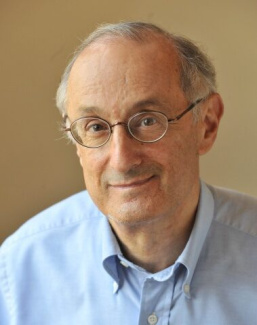
Such relationships can be found at the highest levels of government, business and academia. Robert Axelrod says he was “motivated to study sycophancy by the frequency with which national leaders overestimate their chances of success in risky decisions.”
“In fact, the current presidents of both Russia and the United States have both shown that they reward advisers who agree with them and punish those who don’t,” said Axelrod, emeritus professor at U-M’s Ford School of Public Policy well known for analyzing a version of the classic game theory scenario, “the prisoner’s dilemma.”
“It is likely that such sycophancy has contributed to their unwarranted optimism about the initial results of their attacks on Ukraine and Iran, respectively.”

Scott Page
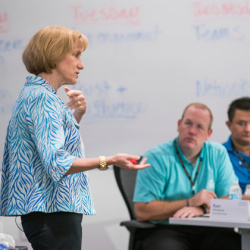
Axelrod teamed up with Scott Page, a Ross School of Business professor who credits Axelrod as one of the people who brought him to U-M more than 25 years ago. Page said he was taken aback by what their model-based analysis revealed.
“When I went into this, I was dubious there would be any rational reason why someone would be sycophantic—it’d just be doing it because you’re sucking up to the leader,” he said. “It was surprising when we worked through the logic: Situations where bad things can happen oddly creates this incentive for people to be sycophants. We know there are things like wars, public projects, major investments in AI that can go horribly wrong.
“The surprise to us was in that domain—where most of the time outcomes are fine but sometimes they are really awful—there’s this kind of rational incentive for people advising leaders to say go for it.”
Rational sycophancy requires that the distribution of outcomes satisfy two conditions: First, it must have a positive median—most outcomes must be successful; and second, it must have a negative mean—the expected value to society must be negative.
“That asymmetry is really what drives the result,” Page said, adding a good result can obscure being exposed “to a ton of risk.”
Page and Axelrod note “a leader may be unable to distinguish rational sycophancy from wise counsel.” That could lead to rational sycophants gaining influence and increasing “the likelihood of catastrophic policy outcomes.”
Such a dynamic could be at play by U.S. leaders in Iran and Russian leaders in Ukraine, they say. The study cites several historical examples of failed decisions partly explained by sycophantic advisers not challenging leaders, including the Challenger space shuttle disaster, Vietnam War and General Motors’ decision to stick with a flawed ignition switch design.
“Our model demonstrates that support for these and other failed decisions may have been rational given the advisers’ incentives,” according to the researchers.
They are concerned that the risk of catastrophic outcomes grows “in the modern interconnected world in which actions by state and nonstate actors can disrupt the stability of large systems—financial markets, power grids, information infrastructure and ecosystems.”
Chief among their recommendations: Leaders should avoid rewards and punishments based on outcomes. They would be better served by evaluating advisers based on the depth and coherence of their input.
Still, they acknowledge that can be a tall order, as leaders can’t help but reward advisers who give advice that turns out well.
To further check sycophancy, Axelrod and Page suggest leaders put in place formal decision-making protocols that include consideration of worst-case scenarios and “change the culture so that advisers are predisposed to be honest.”