

Learning by Building: Inside the Ross Full-Time MBA Entrepreneurial Experience
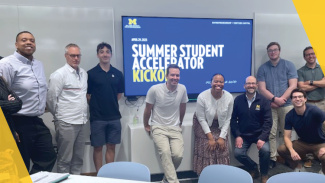
The Ross School of Business offers a lot of resources for MBA students pursuing careers in any industry — whether they’re looking to pivot, learn new skills, or advance in their field. For some students, there’s also a fourth reason for pursuing their MBA: to build something new. At the Zell Lurie Institute for Entrepreneurship, Michigan Ross offers a path for these aspiring entrepreneurs.
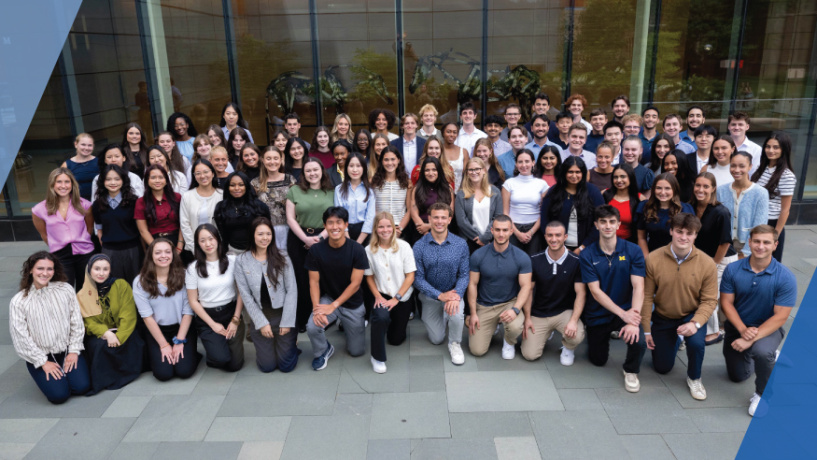
Through ZLI, students have many opportunities to learn about starting and growing businesses. One of the most notable offerings is the year-long Zell Entrepreneurs Program. Each year, ZLI selects a cohort of exceptional students from a pool of applicants across Ross and U-M to join the program. This group gains access to benefits designed to help jumpstart their careers in the startup space, including mentorship from Ross faculty and external advisors, peer support and collaboration, networking opportunities with partner school entrepreneurship programs, and funding opportunities to support their ideas.
Once in the program, Zell Entrepreneurs follow one of two paths: the venture track, which equips them to pursue their startup ventures full-time after graduation, or the entrepreneurship through acquisition track, which prepares them to search for and acquire a company to purchase and/or lead.
To learn more about how MBAs have benefitted from this program, we asked four current students in the Zell Entrepreneurs cohort to share their experiences so far, including how business school has shaped their career goals and the resources they’ve used at Ross to build their futures.

Jaenelle Lauture, MBA ’26
Business or track
Business - Krik Krak: An educational platform designed to close the gap between school reading instruction and parental support at home.
What are your post-MBA career goals?
Post-MBA, I plan to continue building Krik Krak with my cofounder — location still to be determined, though likely Chicago. I’m genuinely excited to keep building and to see the real impact we can have over time.
It’s funny, when I applied to business school, I thought I was getting out of the field of education. And here I am again, just from a different angle. I’ve realized I actually enjoy building in this space. Supporting families and thinking about how kids learn feels natural to me.
In the near term, we’re focused on deepening our work in early literacy — strengthening family engagement in reading and validating impact through pilots and partnerships.
Long term, I want to explore how Krik Krak can expand beyond literacy and better support parents in STEM learning as well. I’m less focused on scaling for the sake of scaling and more focused on building organically in a way that truly helps parents feel confident supporting their children. If we do that well, growth will follow. My goal is to stay in edtech and continue building tools that make families feel capable, not overwhelmed.
What ZLI resources have you utilized, and how are they helping you reach your goals?
Becoming a Zell Entrepreneur has probably been the most transformational part of my time at Ross. More than anything, it shifted how I see myself. Before Zell, I was building something I cared about. Through Zell, I started to really believe I was a founder.
The mentorship has been real and hands-on. I’ve worked closely with so many mentors, and they’ve really advocated for me and for Krik Krak in rooms I wasn’t in yet. I got to sit in boardrooms of investment and family offices and pitch my idea to get candid feedback — that exposure built my confidence and my judgment, and I'm so much better for it.
My journey with ZLI started in the Social Venture Fund, first as an investment associate and now as vice president of impact. Learning how to evaluate companies, reading cap tables, conducting due diligence, and assessing impact alongside financials completely changed how I think about building my own. It forced me to be sharper and really gave me insight into how social impact investors will be evaluating a company like mine.
I also participated in a few other programs, such as Mingle ‘n’ Match, while searching for a technical cofounder. It didn’t lead to the right match at the time, but it taught Anino (my cofounder) and me a lot about what we need in a partner and how to articulate the vision clearly. Competing in the Michigan Business Challenge, where we advanced each round, helped me grow as a storyteller. Every pitch made the idea stronger; they poked holes, and we got the opportunity to fill them.
What parts of your Ross experience have been most helpful to you so far?
The Social Venture Fund changed how I think. Sitting in diligence meetings and evaluating companies forced me to ask harder questions about financial sustainability, impact, and what actually makes a venture durable. I approach decisions with a different level of rigor now because of that experience.
Becoming a Zell Entrepreneur stretched me in a more personal way. Being in rooms with experienced operators and investors, sometimes just listening and sometimes presenting, helped me grow into the role of founder. The mentorship has been direct and honest. It made the work feel real and pushed me to rise to it.
Serving in the Black Business Student Association has shaped me just as much. Planning our retreat for 40 members in northern Michigan required a different kind of leadership. Coordinating logistics, managing personalities, and creating space for people to feel connected reminded me that leadership is not only about strategy, it is also about responsibility and care. That experience grounded me in a way that venture building alone could not.
Academically, courses like Reexamining Capitalism (MO 680) have pushed me to reflect on the kind of leader I want to be, especially in education. Advanced Competitive Strategy (STRATEGY 669) reinforced that innovation is not just about new products. It is about being thoughtful about where and how you compete.
Each of these experiences shaped a different part of me. Together, they made this experience feel full.
What have you learned from working alongside fellow entrepreneurs and the Michigan Ross community?
Working alongside fellow entrepreneurs has been one of the defining experiences of my MBA. A trip to Chicago a few months ago brought many of us closer, and since then, we’ve built real trust.
It created space to be vulnerable about setbacks and failures, while also celebrating wins. It feels really great to be in a community with people who see me and understand what I’m going through right now. We’ve created group chats where we hold each other accountable and share advice that goes beyond surface-level encouragement, because we really want to see each other win.
What advice do you have for new or prospective students interested in coming to Ross to pursue their entrepreneurial dreams?
Use everything. Seriously.
If you are building something in tech and do not know where to start, enter a pitch competition to improve your public speaking. Join the Tech Innovation Jam if you do not yet have an idea of your own. If you have an impact-focused idea, apply to the Founders Program through B+I. Join a fund. It is hard, but it will sharpen you in ways you do not expect.
And more than anything, use ZLI. Talk to the entrepreneurs-in-residence. Go to the talks. Network. Ask for feedback. The U-M community is excited and ready to challenge you, but also to champion you.
There is something powerful about building here while you still have the safety net of being a student. Take advantage of that. Lean in early. Seek feedback before you feel ready. The resources are here, but they only work if you actually use them.
It is one of the best decisions I made.

Ryan Lynn, MBA ’26
Business or track
Business - IntelligentNoise: An applied AI company for go-to-market teams.
What are your post-MBA career goals?
My goal is to continue building and scaling our company full-time after graduation. We're an applied artificial intelligence company primarily focused on mid-market and enterprise go-to-market workflows. In short, we deploy AI agents that help sales and revenue operations teams drive new opportunities and revenue.
What ZLI resources have you utilized, and how are they helping you reach your goals?
I've tried to take advantage of as much as possible: the ZLI Summer Accelerator, Zell Entrepreneurs, the Silicon Valley Experience, the Zell Lurie Commercialization Fund, and more.
The Silicon Valley Experience was probably the experience that impacted me most. It introduced me to current students across all of U-M's programs, and very successful alumni founders and investors. Those interactions gave me practical advice, ongoing mentorship I still rely on, and friendships that have lasted well beyond the program.
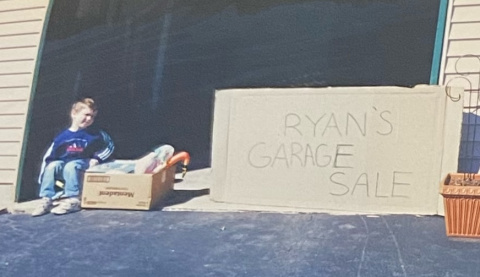
The Summer Accelerator is where I made the most progress on my goals. It gave me the gift of time and focus. I was able to work on the business full-time with structured programming. That helped me go back to New York, pressure-test ideas, build early prototypes, and meet with heads of AI at various firms to evolve the business based on real feedback. It set the stage for the Zell Entrepreneurs Program and for what I plan to continue after graduation.
What parts of your Ross experience have been most helpful to you so far?
The combination of ZLI's programs, the people I've met, and the general freedom the MBA provides to try different things has been most helpful. If I were still working a full-time job, I wouldn't have had the space to learn new skills, test ideas, meet new people, and let things compound over the last year and a half. There was also a two-week stretch in the fall of my first year when I sat in on talks by Sam Altman from OpenAI, Bill Gurley from Benchmark, and Vince Hankes from Thrive Capital, back to back to back. Hearing and learning directly from people operating at that level doesn't happen in many places.
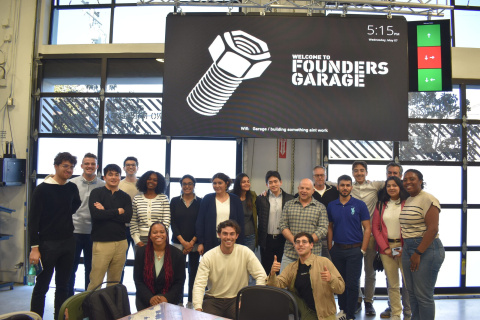
What have you learned from working alongside fellow entrepreneurs/the Michigan Ross community?
Working alongside the Ross community, I've learned that you have to find what excites you and pursue it — and that not everything that excites you will excite the next person. And that's fine. I have a friend here who's really into real estate — he can look at a building and appreciate the architecture, and estimate the cost and square footage on the spot. I couldn't care less about that, and he couldn't care less about AI agents. But we both found the thing that excites us, and that's what matters.
With fellow entrepreneurs specifically, the biggest thing I've taken away is to just keep moving. A lot of people get stuck trying to figure out the "right" time to start, and the reality is, there isn't one. There's a great quote I come back to a lot: "Action produces information. So just keep doing things."
What advice do you have for new or prospective students interested in coming to Ross to pursue their entrepreneurial dreams?
Get plugged in early and leverage everything ZLI and Ross have to offer. Try to meet new people working on similar things. It's easy to get swept up in the day-to-day MBA experience, so you have to carve out time for it.
And the Michigan network is massive — people are genuinely eager to help if you just reach out and give them a "Go Blue!" Can't recommend that enough.

Ebbin Daniel, MBA ’26
Business or track
Entrepreneurship Through Acquisition Track - Pursuing opportunities in manufacturing services and healthcare services in the United States.
What are your post-MBA career goals?
My goal is to pursue entrepreneurship full-time and scale my startup into a sustainable, value-creating company.
What ZLI resources have you utilized, and how are they helping you reach your goals?
The Zell Entrepreneurs cohort has been transformative. Learning alongside ambitious founders, participating in workshops and office hours, traveling to innovation hubs, and connecting with peers from the Kellogg School of Management and Reichman University expanded my perspective. More than anything, the sense of community and accountability pushed me to think bigger.
Dare to Dream (stages one, two, and three) also helped me move from early customer discovery to thinking strategically about long-term capital structure, investor relationships, and scalable growth. Office hours with entrepreneurs-in-residence have been invaluable, too. Having direct, candid conversations about pricing, contracts, strategy, and real-world execution accelerated my growth significantly. Workshops across AI, sales, fundraising, and industry trends have provided additional practical tools that I actively apply to my venture.

What parts of your Ross experience have been most helpful?
Access to people, networks, and resources. The ability to engage with entrepreneurs-in-residence, alumni founders, investors, and startup mentors has been incredibly powerful. Ross doesn’t just teach entrepreneurship; it is filled with people who are actively building.
What have you learned from working alongside fellow entrepreneurs and the Ross community?
Community matters. Ross entrepreneurs are humble, hardworking, and intellectually curious. Being surrounded by peers who are building, acquiring, experimenting, and supporting one another creates an environment where ambition feels normal, and collaboration is natural.
What advice do you have for prospective students interested in entrepreneurship at Ross?
The fastest way to learn whether something works is to test it. Start before you feel completely ready. Experiment. Evaluate. Iterate. Entrepreneurship is uncertain, but growth is guaranteed. Ross gives you the community, tools, and a support system. Bet on yourself and let the Ross community amplify that bet.
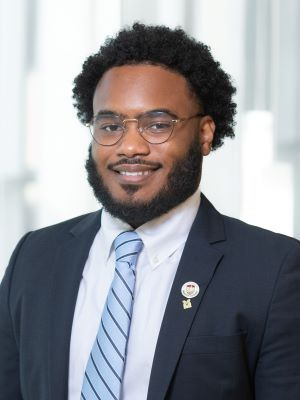
Kenny Berrouet, MBA ’26
Business or track
Entrepreneurship Through Acquisition Track - Pursuing traditional search in compliance-driven, labor-intensive business-to-business service companies.
What are your post-MBA career goals?
As a first-generation Haitian American, my deepest ambition is to help build a stronger, more connected business infrastructure across the Caribbean and Black communities in the United States to bridge the diaspora, catalyzing investment, and driving economic prosperity for communities that poured everything into us. But to get there, I need to know what it actually takes to start, acquire, and operate a business that creates real value. Everything I'm doing at Ross is in service of that larger mission.
What ZLI resources have you utilized, and how are they helping you reach your goals?
Honestly? As much as I possibly could.
I came in thinking I was a founder. I went through two rounds of Dare to Dream, deep in the work of building a new venture, until the government policies my idea depended on shifted, and just like that, it was dead in the water. That experience was humbling in the best way. It taught me when to let go, how to pivot with intention, and something even more important: I'm not a zero-to-one person. I'm a one-to-100 person. I'm energized by taking something that already exists and making it meaningfully better.
That self-awareness led me to the ETA track, where I was selected as a Zell Entrepreneur focused on acquiring a lower-middle-market business. And the ZLI alumni network has been indispensable, opening doors and accelerating relationships I couldn't have built anywhere else.
What parts of your Ross experience have been most helpful/reliable to you so far?
Being part of the Zell Entrepreneurs community has been foundational: the people, the programming, and the standard it holds you to.
But the moment that changed me most came during my Multidisciplinary Action Project. I was working on an equity divestiture project, helping an indigenous tribe diversify its portfolio beyond the gaming industry. During our on-site, the chief operations officer pulled up a pro forma mid-meeting and asked our group, "Quick gut check, what do you think of my projections?" I froze internally because I had a general sense of what I thought; however, in that moment, I realized that, to sit in that executive seat, I still had a long way to go before I could speak confidently.
With that learning, I resolved myself to doubling down on finance for my entire MBA2 fall. That's the kind of clarity the action-based learning approach at Ross gives you, honest mirrors if you're willing to challenge yourself and look into them.
What have you learned from working alongside fellow entrepreneurs and the Michigan Ross community?
In Professor Cheng Gao's Advanced Competitive Strategy (STRATEGY 669) course, we explored the idea of borrowing solutions from entirely different industries when evaluating a business problem. That concept has stuck with me because it's exactly how the Ross community operates.
My classmates are building search funds, launching startups, competing in venture competitions, pursuing acquisitions, and many other amazing endeavors. Rather than guarding their insights, they share them freely and are always willing to jump on a call anytime. This mindset applies to our alum community as well. Checking in with fellow entrepreneurs across tracks has consistently sparked my best thinking. There's a collaborative norm here that you don't take for granted once you've seen it.
What advice do you have for new or prospective students interested in coming to Ross to pursue their entrepreneurial dreams?
I've heard it said about U-M: "It's big enough that it matters, but small enough that you matter." That's exactly right. There's a scrappy, family feel here where one person's win genuinely feels like a collective win. Pour into this community, don't show up trying to extract from it.
And take the hard classes. Whatever "hard" means for you, take them anyway. If you'd told me when I was teaching fifth- and seventh-grade humanities that I'd be modeling leveraged buyouts and identifying acquisition targets, I would have thought you were out of your mind. But here I am. I'm not perfect at it, and I have so much more to learn. But I wouldn't be anywhere close to where I am now if I hadn't just started.
So that's my advice: just start.