

Michigan Ross Master of Accounting Alums Excelling Across Industries

A Master of Accounting degree can be a great tool for students looking to start careers in public, corporate, or government accounting. With a curriculum structured to provide everything students need to succeed on the certified public accounting exam, Ross School of Business MAcc students continue to have one of the highest CPA exam pass rates in the country.
But not all accounting students are interested in getting their CPA or, in some cases, working in traditional accounting roles. Many students use the one-year MAcc Program to build out their financial and strategic thinking with the goal of applying it to roles in industries like consulting, banking, marketing, and more.
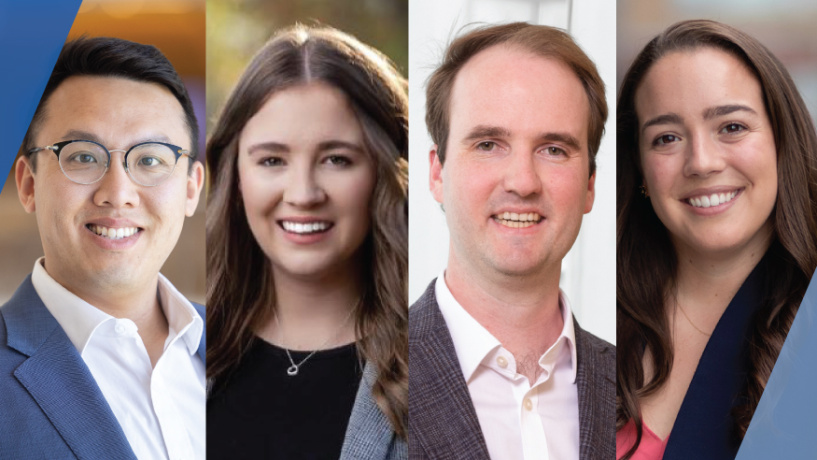
To learn more about the non-traditional-accounting careers pursued by some MAcc graduates, we asked three recent alums to share what they’re doing after graduation and how their accounting backgrounds give them a competitive edge in their work.

Lauren Greshak, MAcc ’24
Current role
I currently work at Kodiak Solutions as a senior associate. Kodiak is a healthcare consulting/technology firm.
What initially drew you to study accounting, and how did your career path evolve from there?
From the moment I took my first undergraduate accounting course, I knew I had found the right path. I enjoyed problem-solving and working with numbers, so accounting felt like a natural fit. I chose to pursue a master’s degree to deepen my knowledge and become eligible for the CPA exam. Before starting graduate school, I completed an audit internship at a Big Four firm and a consulting internship. Through those experiences, I realized that public accounting wasn’t the best fit for me — and that consulting was the direction I wanted to pursue.
What skills from your accounting education do you rely on the most in your current role?
I rely heavily on the analytical and problem-solving skills I developed throughout my education. In my day-to-day work, I review clients’ financial data and provide actionable recommendations to help increase revenue or address operational challenges. The case studies and presentations I completed in school prepared me for this, giving me the confidence and the practical skills needed to succeed in my career.
Many people think an accounting degree leads to a very specific career path. What would surprise them about the ways you use your degree today?
I continue to rely on my accounting background in my career today. Much of my work involves analyzing hospitals’ income statements and balance sheets, as well as assessing the value of their accounts receivable. The foundation I gained through my accounting education has really differentiated me from colleagues who don’t share that experience. An accounting degree offers far more than just strong math skills; it also builds essential abilities through presentations, group projects, and practical coursework that prepare you to succeed professionally.
What advice would you give to accounting students who are curious about careers outside of public accounting?
Just because you are getting an accounting degree does not mean you must work in public accounting. If you have other interests, be sure to reach out to alumni and network with companies that interest you. Accounting degrees can be very versatile, so make sure you find something you are excited and passionate about!
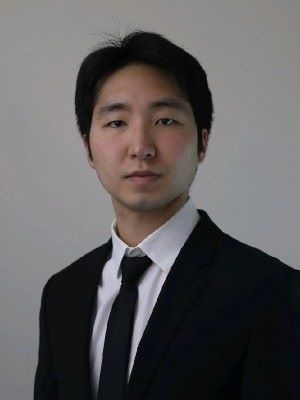
Daniel Ryou, MAcc ’24
Current role
I am currently an associate at Goldman Sachs, where I focus on the firm’s earnings releases.
What initially drew you to study accounting, and how did your career path evolve from there?
I have always been drawn to structure and precision, which initially led me to study accounting. While I considered fields like public relations and sales because I enjoy storytelling and working with metrics, I realized that I am more interested in analytical, detail-oriented work.
In many environments, being highly detail-focused can feel excessive, but in accounting, it’s a strength. The field rewards discipline, accuracy, and consistency, qualities I find engaging and fulfilling.
Over time, my career has expanded beyond traditional accounting roles. The skills I developed — attention to detail, structured thinking, and reliability — have translated well across different areas of business. Accounting gave me a strong foundation and the flexibility to grow into broader, more strategic work.
What skills from your accounting education do you rely on most in your current role?
Even as my role has evolved, I rely on core accounting skills every day. In earnings releases, I apply my understanding of financial reporting, generally accepted accounting principles, internal controls, and risk assessment to ensure accuracy and consistency in quarterly and annual reporting.
This foundation enables me to analyze complex financial data, identify inconsistencies, and understand the drivers of performance changes. It also helps me to evaluate unusual items and communicate key insights clearly to senior management and external stakeholders. Additionally, in cross-functional work with teams such as investor relations, financial planning and analysis, and legal, having a strong accounting background enables me to explain processes, support decision-making, and maintain credibility. In many ways, accounting has provided me with a structured way to approach problems.
Many people think an accounting degree leads to a very specific career path. What would surprise them about the ways you use your degree today?
Many people assume that an accounting degree leads to a narrow or predictable career path, but my experience has been much broader. In my current role supporting earnings releases, the work goes far beyond analyzing numbers. A significant part of my role involves shaping how results are communicated to investors, executives, and other stakeholders.
This requires not only technical accounting expertise but also strong judgment and the ability to translate complex financial information into insights that are easily understandable. Ultimately, my degree has served as a launching pad, allowing me to move into roles that intersect finance, strategy, and communication.
What advice would you give accounting students who are curious about careers outside of public accounting?
My advice is to be honest with yourself and use your early career experiences to explore your strengths. Following a traditional path, such as public accounting, is a great way to build professional resilience and technical rigor. However, do not see an MAcc or CPA as a limitation. Instead, think of it as a powerful toolkit.
When you combine technical credibility with the leadership skills developed at Ross, you become a well-rounded professional capable of pivoting into almost any industry. Whether you stay in accounting or move into another field, the foundation you built at Ross will prepare you for roles that value critical thinking, structured problem-solving, and strategic insight.
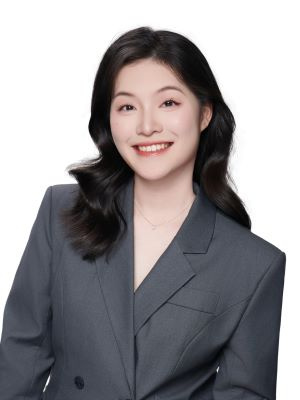
Jing Lao, MAcc ’22
Current role
I’m a financial analyst at Google, serving as a trusted advisor to business partners and providing business insights and strategic analysis to empower thoughtful decisions for the near- and long-term success of products and the broader organization.
What initially drew you to study accounting, and how did your career path evolve from there?
I actually started college in mechanical engineering. In my sophomore year, I realized I loved work that combines data analysis with communication, which led me to accounting. I learned that accounting is more than just crunching numbers; it’s about using data to tell the story of where a company has been, where it is now, and where it should go next.
During undergrad, I tried out internships in financial institutions, Big Four audit, and big tech pricing strategy to explore how accounting and broader finance function in the real world. These experiences made me realize I wanted to work in-house at a company. While in the Ross MAcc program, I focused my search on corporate roles and was lucky enough to land a job at Google.
What skills from your accounting education do you rely on most in your current role?
Classes like Financial Statement Analysis (ACC 711) and Advanced Financial Accounting (ACC 625) were great for understanding complex business moves. I also took MBA electives, such as Financial Communication and Investor Relations (ACC 618), to gain more context on how to translate complex financial data into a compelling strategic narrative for shareholders. On the technical side, learning SQL was a game-changer — I use it every single day for my analytical work.
The group projects were really helpful for practicing presenting and communicating ideas. In a global company like Google, collaborating with people from all backgrounds is a huge part of the job.
Many people think an accounting degree leads to a very specific career path. What would surprise them about the ways you use your degree today?
I actually started at Google as a risk and controls analyst, spending two years improving internal controls and optimizing financial processes. Later, I moved into my current role in financial planning and analysis, where I focus more on helping the business grow strategically.
Moving from compliance to a strategic advisor might seem like a big jump, but my accounting background made it possible. Knowing the details of journal entries and accruals helps me explain exactly why our actual results differ from our forecasts. By building "audit-proof" financial models, I’ve earned my leaders' trust. It’s not just about reporting numbers; it’s about explaining what’s driving the business and finding future opportunities.
What advice would you give accounting students who are curious about careers outside public accounting?
I deeply resonate with an inscription on a commemorative chair outside the Ross building: "To know your limits is to realize you have none."
Try different things to figure out what you like (and what you don't!) before you commit to one path. If you combine your accounting knowledge with new tech skills, you’ll be more efficient and can find cool roles outside of traditional paths. The possibilities are huge — I’ve seen accounting grads move into program management, data science, strategy, and many other fields!