






This latest volume in the Learning in Higher Education series, Innovative Teaching and Learning in Higher Education, brings together examples of teaching and learning innovations, within the domain of higher education. The anthology is diverse in nature and showcases concrete examples of innovative teaching and learning practices in higher education from around the world. The contributions come from all scientific disciplines and in all teaching and learning contexts.
The twenty-eight inspiring examples in this volume show considerable diversity in their approaches to teaching and learning practices; at the same time they improve both student engagement and student learning outcomes. All the authors argue that their innovative approach has helped students to learn differently, better, and more. For those involved in higher education, there is a lot to be gained from reading these narrative accounts of innovative teaching and learning.

In this book, you will learn what you need to do to achieve the success in life that you desire and deserve. The author, University of Michigan Business School professor Paula J. Caproni, Ph.D., provides you with a practical framework that will help you get better results at work, be successful in your career, and enjoy a fulfilling life outside of work.

As economic growth slows in the developed world, the base of the pyramid (BoP) represents perhaps the last great, untapped market. Of the world's 7 billion inhabitants, around 4 billion live in low-income markets in the developing world. These 4 billion people deserve—and, increasingly, are demanding—better lives. At the same time, the business community seeks new opportunities for growth, and the development community is striving to increase its impact. With these forces converging, the potential for mutual value creation is tremendous. This book provides a roadmap for realizing that potential.
Drawing on over 25 years of experience across some eighty countries, Ted London offers concrete guidelines for how to build better enterprises while simultaneously alleviating poverty. He outlines three key components that must be integrated to achieve results: the lived experiences of enterprises to date—both successes and failures; the development of an ecosystem that is conducive to market creation; and the voices of the poor, so that entrants can truly understand what poverty alleviation is about. London provides aspiring market leaders and their stakeholders with the tools and techniques needed to succeed in the unique, opportunity-rich BoP.

You’re ambitious. You’re not afraid to take risks. You want to bring about positive social change. And while your peers have left a trail of failed start-ups in their wake, you want to initiate change from within an established company, where you can have a more far-reaching, even global impact.
Welcome to the club—you’re a social intrapreneur.
But even with your enviable skill set, your unwavering social conscience, and your determination to change the world, your path to success is filled with challenges. So how do you get started and maintain your momentum?
Changing Your Company from the Inside Out provides the tools to empower you to jump-start initiatives that matter to you—and that should matter to your company. Drawing on lessons from social movements as well as on the work of successful intrapreneurs, Gerald Davis and Christopher White provide you with a guide for creating positive social change from within your own organization.

Rooted in strategic management research, Business Model Innovation explores the concepts, tools, and techniques that enable organizations to gain and/or maintain a competitive advantage in the face of technological innovation, globalization, and an increasingly knowledge-intensive economy.
The book investigates how organizations can use innovations in business models to take advantage of entrepreneurial opportunities from crowdsourcing and open innovation, Long Tails, social media, disruptive technologies, less-is-more innovations, network effects, and scarcity of complementary capabilities. The book also looks at the ways firms can use innovations in business models to exploit or defend against threats. With twelve supplementary cases to help readers apply the concepts and techniques, this book is a must-have for anyone looking to understand the fundamentals of business model innovation.
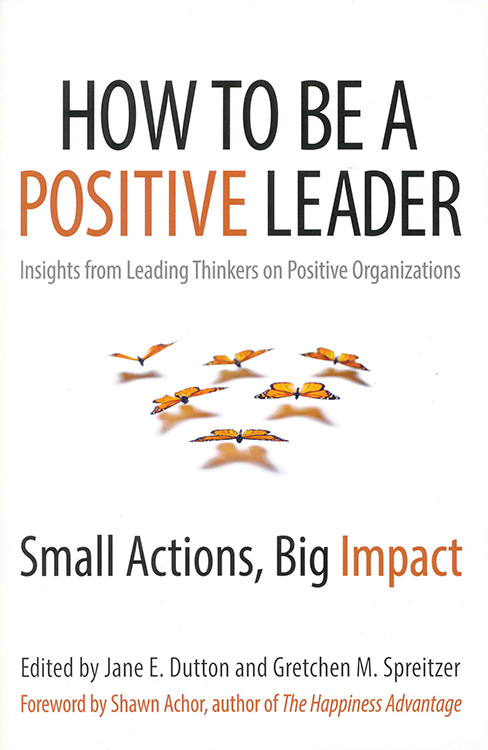
Positive leaders are able to dramatically expand their people’s—and their own—capacity for excellence. And they accomplish this without enormous expenditures or huge heroic gestures. Here leading scholars—including Adam Grant, author of the bestselling Give and Take; positive organizational scholarship movement cofounders Kim Cameron and Robert Quinn; and thirteen more—describe how this is being done at companies such as Wells Fargo, Ford, Kelly Services, Burt’s Bees, Connecticut’s Griffin Hospital, the Michigan-based Zingerman’s Community of Businesses, and many others. They show that, like the butterfly in Brazil whose flapping wings create a typhoon in Texas, you can create profound positive change in your organization through simple actions and attitude shifts.
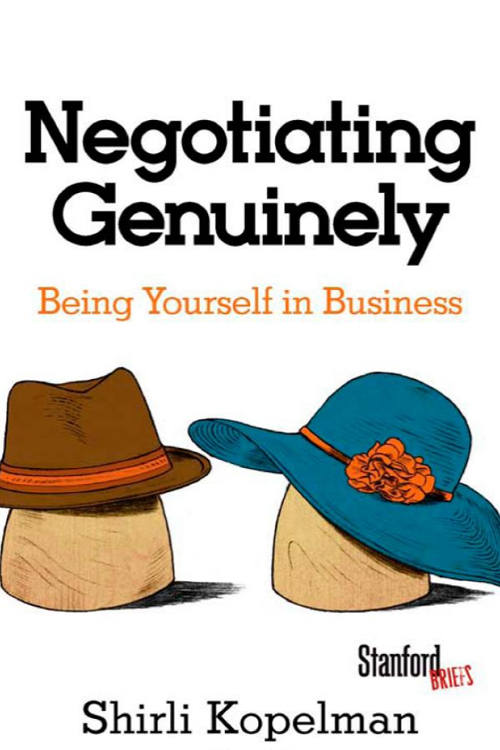
We often assume that strategic negotiation requires us to wall off vulnerable parts of ourselves and act rationally to win. But, what if you could just be you in business? Taking a positive approach, this brief distills years of research, teaching, and coaching into an integrated framework for negotiating genuinely.
One of the most fundamental and challenging battlegrounds in our work lives, negotiation calls on us to compete and cooperate to do our jobs well and achieve extraordinary results. But, the biggest challenge in a negotiation is to be strategic while also being real. Author Shirli Kopelman argues that this duality is both possible and powerful. In Negotiating Genuinely, she teaches readers how to reconcile the disparate hats that they wear in everyday life—with families, friends, and colleagues—bringing one "integral hat" to the negotiation table. Kopelman develops and shares techniques that illuminate this approach; exercises along the way help readers to negotiate more naturally, positively, and successfully.
A fundamental shift is underway that will change how we conceive of value. In an era of increasing interconnectedness, individuals, as opposed to institutions, stand at the center of value creation. To adapt to this tectonic shift, organizations can no longer unilaterally devise products and services. They must engage stakeholders—from customers and employees to suppliers, partners, and citizens at large—as co-creators.
Co-creation guru Venkat Ramaswamy and Kerimcan Ozcan call for enterprises to be mindful of lived experiences, to build engagement platforms and management systems that are designed for creative collaboration, and to develop "win more-win more" strategies that enhance our wealth, welfare, and, well-being. Richly illustrated with examples of co-creation in action, The Co-Creation Paradigm provides a blueprint for the co-creative enterprise, economy, and society, while presenting a conceptual framework that will guide organizations across sectors in adopting this transformational approach. Challenging some of our most deeply held ideas about business and value, this book outlines the future of "business as usual."