

How Michigan Leaders Should Rethink Strategy Amid Uncertainty

For leaders across Michigan—as across much of the global economy—uncertainty is no longer an occasional disruption to plan around. It is the environment in which business must operate.
Economic pressure, technological acceleration, labor shifts, regulatory complexity and geopolitical instability are colliding in ways that make long-range planning more difficult and less predictable. Yet many companies are still relying on strategic planning models built for a more stable era: annual cycles, fixed assumptions and the expectation that enough clarity will emerge before critical decisions must be made.
That approach reflects a deeper challenge many organizations now face: the tools and processes used to guide strategy were designed for a far more stable environment.
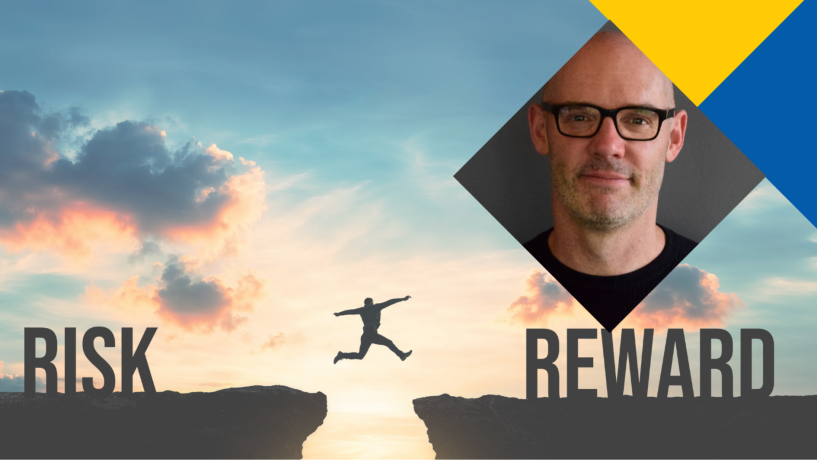
Sabrina Sullivan, founder of by + by foresight and a strategist who advises organizations on long-term strategy and systems change, says leaders must rethink what planning itself means in an era of persistent volatility.
From prediction to preparation
One of the biggest misconceptions about strategic foresight is that it is about predicting the future. Sullivan says that is exactly the wrong frame. Instead of forecasting a single outcome, foresight encourages leaders to explore multiple plausible futures and use them to strengthen decisions today.
That shift changes the role of strategy. Rather than committing to one predicted future, leaders should stress-test assumptions, watch for emerging signals and identify where action is required now versus where flexibility should be preserved.
Sullivan describes the shift as moving from planning as prediction to planning as preparation. The goal is not to eliminate uncertainty, but to build the capability to navigate it with greater discipline, intention and confidence.
She also encourages leaders to rethink uncertainty itself. In her view, uncertainty is not just where threats appear—it is also where new innovations and opportunities begin to emerge.
Why waiting can be its own risk
In this environment, many leadership teams default to a pattern that feels responsible: wait, gather more information and see how things develop. But prolonged uncertainty often punishes that instinct.
The longer leaders wait for clarity, the more likely they are to miss the moment when preparation should have begun. Sullivan argues that one of the most common mistakes organizations make is treating uncertainty as a temporary disruption rather than a structural condition. As she puts it, “In a world where change is constant, the real risk is sticking to a plan that assumes it won’t be.”
That is where Mike Barger’s perspective becomes particularly relevant. Barger, a clinical assistant professor at Michigan Ross, co-founder of JetBlue Airways and an expert in crisis leadership, approaches the challenge from a different angle: how leaders and teams perform when disruption actually occurs.
In many organizations, he notes, crisis readiness is still treated as a “break glass in case of emergency” plan—something activated only when events force it. But in a world of continuous disruption, readiness has to become part of the organization’s operating system.
“Leaders should treat crisis readiness as an everyday leadership discipline, embedding it into organizational infrastructure rather than relying on moments of heroics,” argues Barger. In practice, Barger says that means installing the infrastructure before it’s needed: crisis response plans, clear decision rights, cross-functional teams and rehearsed decision processes that help organizations respond quickly under pressure.
Strategy as a living system
Taken together, Sullivan’s and Barger’s perspectives point to a broader shift in how strategy must function inside organizations. In a prolonged period of instability, strategy cannot simply be a document reviewed once a year. It has to function more like a living system—one that helps organizations sense change, interpret what matters and respond without losing coherence.
That requires embedding new practices into everyday work, whether it’s scanning for emerging signals, testing assumptions through scenario exercises, or asking “what if” questions that challenge the status quo. Just as important, leaders must create the conditions that allow difficult questions to surface early. When teams feel safe challenging assumptions or raising potential risks, organizations are better positioned to adapt before problems escalate.
For leaders across Michigan and beyond, the challenge is not predicting the future perfectly. It is building organizations capable of preparing for it.
To help leaders build these capabilities, Michigan Ross Executive Education is launching Advanced Strategic Leadership: Harnessing the Power of Foresight this fall. The new hybrid blended program will bring senior leaders together to explore how foresight can be embedded into strategic decision-making, helping organizations anticipate disruption, identify blind spots and turn uncertainty into opportunity.
The conversation will continue this fall when Michigan Ross Executive Education hosts a 1.5-day leadership event at its new Los Angeles campus, where both Sullivan and Barger will join other speakers to explore how organizations can lead more effectively through an age of constant change. Registration will open soon.
The future may remain uncertain—but how leaders prepare for it doesn’t have to be.
This article was originally published on Crain's Detroit Business