





Explore the faculty research, thought leadership, and groundbreaking philosophies that established Michigan Ross as one of the world’s top business schools.


Professor Gretchen Spreitzer received her PhD from Michigan Ross in 1992. Her work on empowerment, stemming from her Michigan Ross dissertation, has set the foundation for a new understanding of the employee experience. Instead of capital that organizations needed to control, empowerment brought forth the idea that employees thrive when they are given the freedom and autonomy to do their work autonomously. This pioneering work ushered in a new era of research and a fundamental shift in how organizations view their relationship with employees.
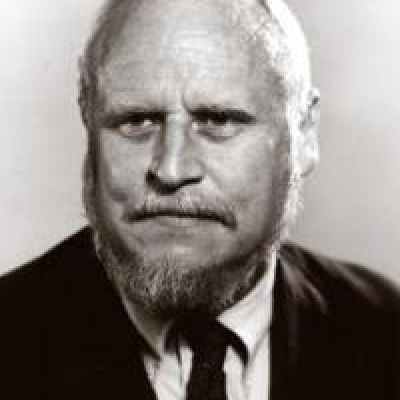

Michigan Ross has long been a pioneer in entrepreneurial education, introducing the nation's first course on entrepreneurship in 1927. However, in the early 1970s, Professor LaRue Hosmer played a pivotal role in championing entrepreneurship education at Ross. He developed and taught courses in small business management and a seminar on small business formation. He is considered the founder of the Michigan Entrepreneur Track and has also inspired present-day entrepreneurship faculty at Michigan Ross, including Professor Andy Lawlor. Lawlor was a student in Hosmer's entrepreneurial management course in 1973, and Hosmer has been an important mentor to Lawlor, helping to bridge the gap between business and teaching. Lawlor began guest lecturing under Hosmer's guidance in 1975 and assumed the teaching responsibilities for the entrepreneurship classes in 1981. Over the years, many successful companies have been born from Hosmer and Lawlor's teaching.


Professor Jim Walsh played a significant role in the development of work on individual, group, and collective cognition in organizations. Interested in managerial mistakes, Walsh wanted to know if executives’ worldviews could blind them to their decision environments. He was also interested in learning how the cognitive capabilities of both leadership teams and the organization itself could be harnessed for the good of organizations. In a 1988 Academy of Management Journal article, Walsh traced how these belief structures might or might not blind executives to their decision environments. He also considered how these belief structures may or may not combine to shape team decision-making. Therefore, he wrote a theoretical paper about these possibilities, which was published in the Journal of Management in 1986. He followed up that article with an empirical effort to measure and trace the impact of “negotiated belief structures” on decision-making (Organizational Behavior and Human Decision Processes published his findings in 1988). His thoughts then turned to the organization as a whole. He wrote a seminal paper on organizational memory, one that identified the nature of information selection, retention, and retrieval processes in organizations – for the good or ill of those organizations. That work was published in the Academy of Management Review in 1991. When interest in cognition in organizations started to grow, Walsh became a founding officer of the Academy of Management’s Managerial and Organizational Cognition Interest Group in 1990 and helped to lead that pioneering group of scholars for the first three years of its existence. Tying all of the insights and experiences together, he wrote what became something of a field-defining scholarly paper in 1995. Titled “Managerial Organizational Cognition: Notes from a Trip Down Memory Lane,” it was published in Organization Science. Today the Managerial and Organizational Cognition Division of the Academy of Management is home to more than 1,200 scholars worldwide. Citing his foundational scholarship and early leadership, the Division honored Jim with its Distinguished Scholar Award in 2020.


In her research published in the American Economic Review, the Review of Economics and Statistics, the Journal of Human Resources, Health Affairs, and other outlets, Professor Sarah Miller has used quasi-experimental methods to evaluate whether receiving improved access to health care in utero, in early childhood, and throughout childhood improves outcomes in adulthood. Miller and her co-authors have found that children who have received eligibility for health insurance through the Medicaid program have improved outcomes on a number of dimensions, both in terms of health and economic outcomes. Additionally, they found that the children of those children who had better access to healthcare in childhood were healthier at birth. This suggests a cycle in which investing in children's health today can have multigenerational benefits that allow the government to fully recoup the cost of its initial investment in the form of higher tax payments and lower spending on welfare programs. Miller's research has been discussed in numerous high-profile news outlets and has strongly impacted how academics and policymakers view investments in children. Furthermore, her papers have been cited nearly 500 times.


Management and Organizations professors Sue Ashford and Jane Dutton invented the concept of "issue selling," arguing that most middle managers don’t simply wait for the organization’s strategy to come down from on high but also actively try to influence what that strategy might be. These active middle managers recognize that organizations have limited attentional capacity, and they try to influence what issues get on the organization’s agenda and gain the attention of top decision-makers for issues such as the need to be more ecologically sensitive, the experiences of gender mistreatment and other social issues. In other words, whereas the literature to that point had construed middle managers as passive recipients, these scholars gave them agency and engaged in several studies to better understand how they use that agency to affect bottom-up change. The impact of this idea can be seen in both the popularity of the advice given to middle managers derived from it and in its anticipation of the larger literature on social movements. Social movements were first studied outside of organizations in society, but scholars later proposed that such movements could also occur within organizations, as in issue selling.


Building on his experience as an attorney at the Federal Reserve, the 2020-22 research of Assistant Professor Jeremy Kress has identified critical weaknesses in bank merger oversight and proposed strategies to reinvigorate bank merger enforcement. Kress' work has shown that lax bank merger oversight has harmed consumers, businesses, and the broader financial system. His research has demonstrated that the prevailing approach to bank merger regulation has increased the cost and reduced the availability of consumer credit, inflated the fees that banks charge for basic financial services, limited small business credit availability, and threatened financial stability. Kress' research has pushed bank merger reform onto the policy agenda in Washington, D.C. by serving as a blueprint for legislation introduced by Senator Elizabeth Warren and inspiring an executive order on bank mergers by President Joe Biden. The Department of Justice also invited Kress to lead a joint initiative with the federal banking agencies to rewrite their bank merger policies.


In 1993, former Michigan Ross finance faculty member Victor Ng, co-authored a paper that is among the top 50 most cited papers in finance. Ng's paper defines the news impact curve, which measures how new information is incorporated into volatility estimates. His paper compares and estimates various new and existing autoregressive conditional heteroskedasticity models, including a partially nonparametric one, with daily Japanese stock return data. New diagnostic tests are presented which emphasize the asymmetry of the volatility response to news. Ng's results suggest that the Glosten, Jagannathan, and Runkle Model is the best parametric model. This path-breaking paper demonstrates the use of a new methodology to show the impact of news on stock prices, probably the most important function of financial markets.


The Integrated Product Development course is a unique cross-disciplinary experiential course delivered jointly by Michigan Ross, the College of Engineering, and the Stamps School of Art and Design. The course requires teams of business, engineering, and art students to execute the full range of the product development and launch process, from early-stage ideation through design and fabrication to launch stage promotion, pricing, and inventory decisions.
It has been continuously offered for more than 30 years and has been featured on CNN and in BusinessWeek, the New York Times, and the Wall Street Journal. Professor William Lovejoy originally designed this course, but it was subsequently taught by a series of dedicated professors drawn from the three units. It remains a course students remember and refer back to throughout their professional careers.


Professor Charles Laselle Jamison, a pioneering figure in the sphere of business management, spent most of his career at the Michigan Business School. Recognizing the importance of the evolving field of management education in 1936, Jamison proposed an organization dedicated to the support of high-quality research, teaching, and practice in the field. His vision led to the official launch of the Academy of Management in 1941. For this instrumental role, he became known as the "Father of the Academy of Management." With the onset of World War II, the Academy's operations were put on hold. However, they were revived in 1947 thanks to Jamison's tireless commitment. Since then, the Academy of Management has become an internationally recognized association for management and organization scholars.
Later in his career, Jamison would cement his legacy as a pioneer in the field of strategic management by publishing his 1953 textbook on business policy. The textbook was one of the first on the subject and showcased his invaluable contribution to the field.


Previously, it was commonly believed that the media had little role to play in capital markets -- that they neither produced information nor disseminated information in a meaningful manner. Professor Greg Miller questioned this logic and set out to see if there was empirical evidence that would support such an assumption.
Miller found that the business press acted as a corporate watchdog that was instrumental in uncovering financial misconduct. As such, the business press was no longer viewed as talking heads, but as investigative journalism which brought value to the market through the governance role it played. With the more recent introduction of social media, many believed that social media had no role to play in capital markets. A team of researchers from U-M, including Beth Blankespor, Miller, and Hal White, decided to take a novel approach and see if social media could improve capital market outcomes.
Their work was the first to show that social media played an important role in disseminating corporate financial information. Their foundation of research was instrumental in corporate investor relation groups adopting social media to disseminate information to market participants.

Every innovation or new product development team faces a fundamental tension: When does one transition from the ideation to the execution phase? Too early a transition risks missing a great yet unrealized idea, and too late a transition risks being unable to bring the product to market on time. This significant and ubiquitous tension poses a challenge for researchers because of the nuanced nature of imagination and creativity and the need to combine that with creating an actual item based on one’s designs. In “Ideation-Execution Transition in Product Development: An Experimental Analysis” (Management Science, 2018) by Michigan Ross Professors Stephen Leider and William Lovejoy, as well as their colleague Evgeny Kagan from the Johns Hopkins Carey Business School, the authors use a novel experimental design to reveal some expected outcomes (later transitions do not change mean performance but increase variance and risk significantly) and some unexpected ones (it is not so much the timing of the transition that drives mean performance, but rather who has decision rights). Specifically, designers should not make the transition decision; the timing should be an exogenously imposed constraint. This external requirement significantly changes designers’ behaviors and results.


In 2002, Professor Ravi Anupindi and his co-authors published the influential paper "Coordination and Flexibility in Supply Contracts with Options" in Manufacturing & Service Operations Management. This work introduced an innovative model that integrated options into supply contracts, offering enhanced management of demand uncertainties in supply chains. The research highlighted the important potential role of options in attaining contractual flexibility to coordinate supply chain participants and improve overall efficiency. The paper influenced subsequent research on supply contract design and demand management, one of the major areas of supply chain management research in the past two decades.


The public corporation in America is vanishing, and more people, from low-income earners to professionals, are doing their work in the so-called “gig economy.” The work of Professors Jerry Davis and Sue Ashford put these two issues on the research agenda of scholarly colleagues. Davis documents the first idea in his book, The Vanishing American Corporation (2016). Although some scholars have suggested that over-regulation might account for this surprising trend, he argues that a more fundamental shift in the economy, enabled by information and communication technologies, was ultimately responsible. By making it cheaper to "buy" rather than "make" inputs (from capital and labor to supplies, manufacturing, and distribution), information and communication technologies have made the parts of an enterprise like a pile of Legos, ready to assemble into a business, scale, and disassemble. This idea explains Nikefication, Uberization, Amazon, and other recent trends in the organization of the U.S. economy, as well as why the same technologies are used differently in different countries, resulting in very different corporate structures. If what Davis says is true, then fewer people will be working in large public corporation settings going forward. This shift may account for the growth in people working independently, some using technologically mediated apps to find and conduct work. Ashford puts the gig economy and gig workers on the agenda of people wanting to understand individuals at work. Her qualitative and quantitative studies identify the challenges faced by those working independently and what they can do to survive and thrive. Challenges include maintaining one’s identity, keeping sufficient income flowing in, staying organized, finding and maintaining work connections, and figuring out how to make working in this manner work over the long run. This research tests a variety of interventions and solicits ideas from individuals working in this manner regarding strategies that make this kind of work-life viable and enlivening.


Originally launched by Michigan Ross Professor David Brophy and now organized and run by the Zell Lurie Institute for Entrepreneurial Studies, the Midwest Growth Capital Symposium began as an opportunity to showcase innovative Michigan ventures seeking funding and connect them with venture capitalists, angel investors, industry stakeholders, and leaders from across the nation.
Today, the Symposium provides a platform for pre-selected Midwest companies to present their business ideas and investment opportunities. These companies span various sectors, such as life sciences, healthcare, technology, food and agriculture, and energy. First held in 1980, the Symposium is the longest-running university-based venture fair of its kind, has gained recognition, and attracts attendees from across the country.


Professor Kenneth Lieberthal was a pioneer in the practice of business school professors contributing their knowledge in public service to society. Lieberthal served as the senior director for Asia for the U.S. National Security Council during the years 1998-2000.
During that same time, Lieberthal was also special assistant to President Clinton for National Security Affairs. His core academic research findings included a seminal analysis of China's bureaucratic system, which featured a nuanced and careful delineation of the fragmented nature of China's political system in the late 20th century.
Lieberthal's research was able to explain why China, during that era, had weak policy implementation at times because of the fragmentation in its bureaucratic system. He was known for introducing U.S. policymakers to a nuanced and careful understanding of the Chinese governmental system and how it functions.


Professor C.K. Prahalad was the major pioneer and advocate of the 'bottom of the pyramid' proposition that selling to the poor can simultaneously be profitable and help eradicate poverty. While appealing, the BOP proposition is also controversial. Professor Aneel Karnani was an early and prominent critic of the BOP proposition. In his 2007 article "The Mirage of Marketing to the Bottom of the Pyramid" and his 2011 book Fighting Poverty Together: Rethinking Strategies for Business, Governments, and Civil Society to Reduce Poverty, he argues for an alternative perspective. Rather than viewing the poor primarily as consumers, it is better to focus on the poor as producers and to emphasize buying from the poor. Both the private sector and government have a critical role to play in alleviating poverty. The best way to alleviate poverty is to raise the real income of the poor by providing them appropriate employment opportunities. The private sector is the best engine of job creation. The government should facilitate the creation and growth of private enterprises in labor-intensive sectors of the economy. The government should also fulfill its traditional, accepted functions of providing adequate access to public services, such as education, public health, drinkable water, sanitation, security, and infrastructure.